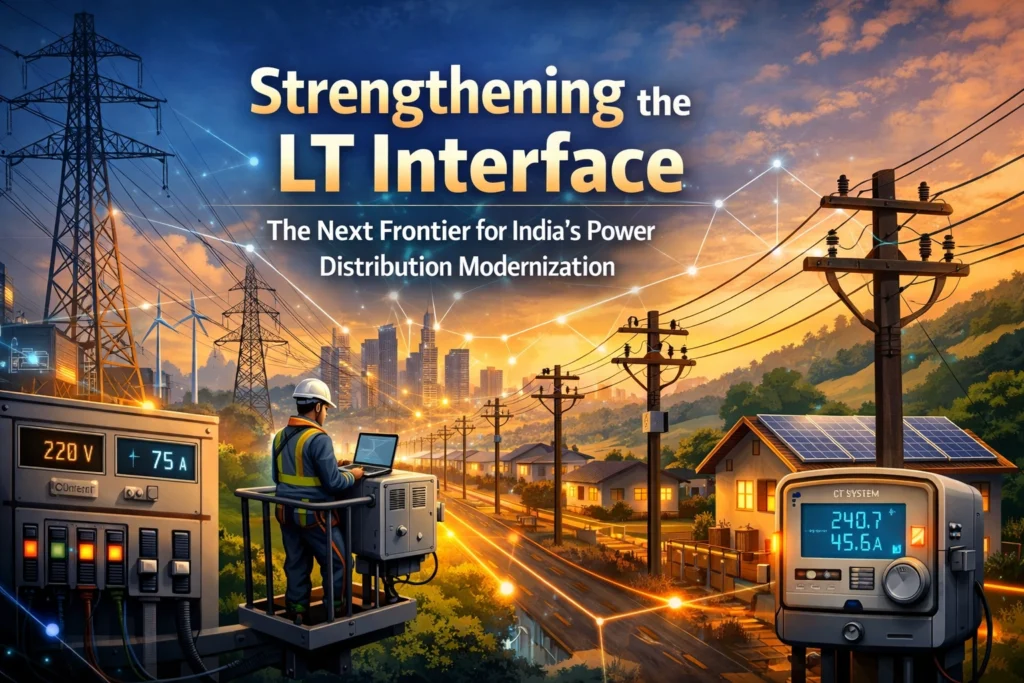
India’s power sector is undergoing a seismic shift. Driven by the Revamped Distribution Sector Scheme (RDSS) and the massive rollout of Smart Metering, the nation is successfully tackling billing inefficiencies and high AT&C losses. However, as we digitize the billing and feeder levels, a critical physical vulnerability remains largely unaddressed: the Low Tension (LT) interface at the Distribution Transformer (DT) level.
In the Indian context, DTs are not tucked away in isolated substations; they are embedded in the heart of our communities. They stand on residential street corners, near bustling marketplaces, and adjacent to schools. This proximity makes the LT distribution box: the point where power transitions from the transformer to the consumer: the most exposed and high-risk node in the entire network.
To achieve a truly "smart" and safe grid, India must move beyond conventional metal enclosures and embrace an intelligent LT safety architecture. This is no longer just an operational preference; it is a public safety imperative.
01. The Ground Reality: Why the LT Interface Matters
The Distribution Transformer is the workhorse of the grid, stepping down voltage for end-use. The LT interface (the outgoing feeders) acts as the gateway for this power. When this gateway is compromised, the consequences ripple through the entire ecosystem.
Currently, the vast majority of India's LT distribution relies on conventional Mild Steel (MS) boxes. While functional in a bygone era, these systems are ill-equipped for modern demands. They represent a significant safety hazard and a financial drain on Power Distribution Companies (DISCOMs).
The LT interface is critical for three reasons:
- Public Proximity: It is the only high-power interface regularly accessible to the general public.
- Asset Protection: Faults at the LT side are a primary cause of transformer burnout.
- Revenue Integrity: It is the primary site for unauthorized "hooking" and energy theft.
02. Challenges in the Current System: The Vulnerability Gap
Traditional LT distribution boxes face a "perfect storm" of environmental and human challenges that compromise the reliability of the Indian grid.
Environmental Exposure and Corrosion
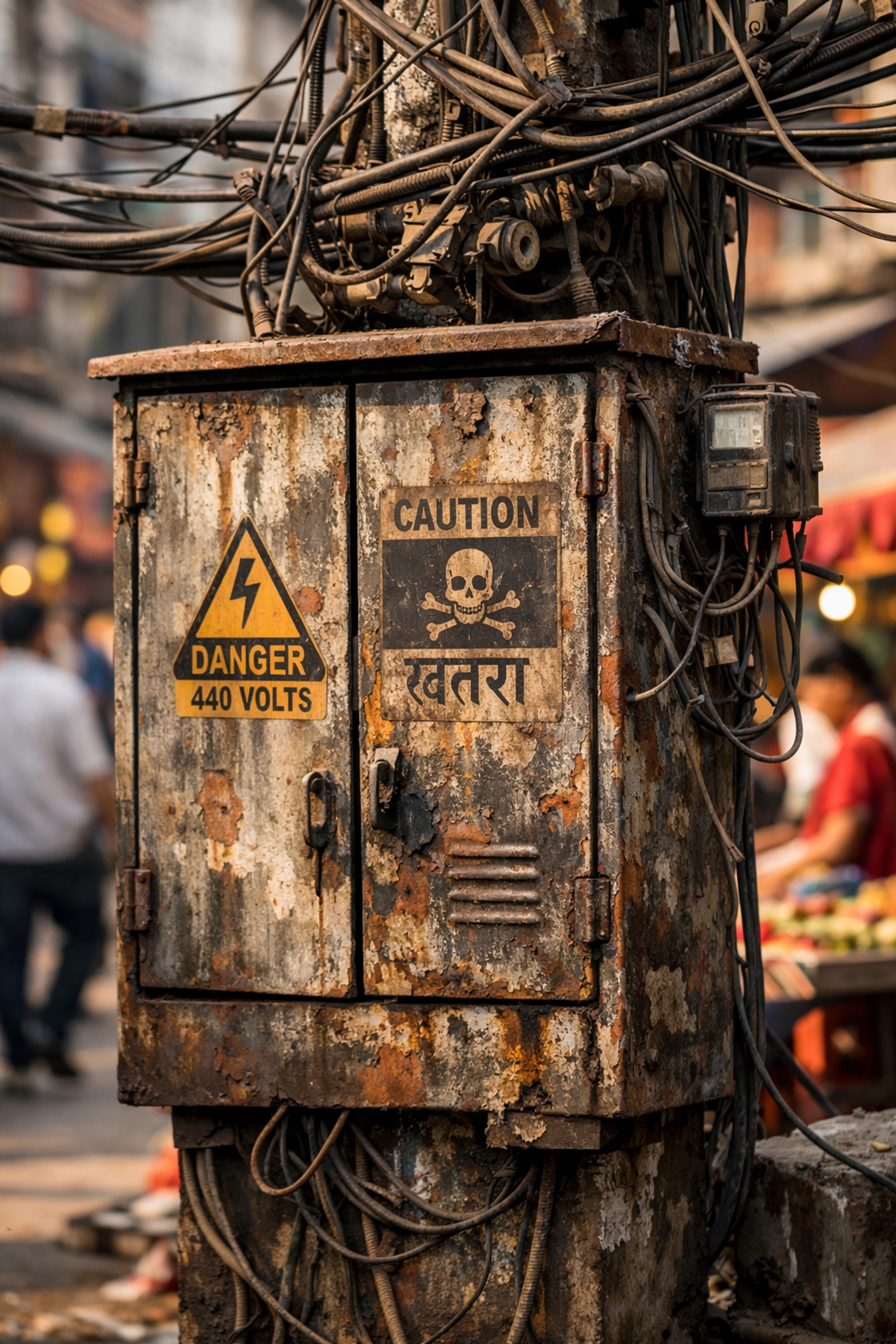
Most conventional boxes are made of MS, which is highly susceptible to corrosion, especially in India’s humid and coastal regions. A corroded enclosure is not just an eyesore; it loses its structural integrity and IP (Ingress Protection) rating. This allows rainwater, dust, and vermin to enter, leading to short circuits and frequent feeder tripping.
Unauthorized Access and Safety Risks
According to data from the National Crime Records Bureau (NCRB), electrical accidents claim more than 11,000 lives annually in India. A significant portion of these fatalities occurs due to accidental contact with energized metal enclosures or during attempts at unauthorized tapping. Conventional boxes, often poorly locked or easily bypassed, provide little deterrent to "hooking," which leads to both revenue loss and fatal electrical shocks.
The Problem of Fault Propagation
In a conventional setup, an LT-side fault (often caused by overloading or poor connections) can reflect back to the transformer. Without high-speed, reliable isolation at the LT box, the DT is subjected to immense thermal and mechanical stress, leading to premature failure.
03. The Consequence Chain: Impact on Distribution Transformers
The health of the LT interface is directly proportional to the lifespan of the Distribution Transformer. In India, the average DT failure rate hovers between 12-15%, a stark contrast to the 1-2% global benchmark seen in developed power markets.
The "Consequence Chain" of a weak LT interface looks like this:
- Poor Connection/Corrosion → High Resistance → Heat Generation.
- Heat Generation → Insulation Breakdown → LT Phase-to-Phase Fault.
- LT Fault → High Current Surge → Transformer Winding Stress.
- Sustained Stress → Transformer Burnout.
Replacing a failed DT is a massive logistical and financial burden, involving hardware costs, labor, and significant "Energy Not Served" (ENS) losses. By strengthening the LT interface, utilities can protect their most expensive distribution assets.
04. India’s Modernization Journey: The Missing Layer
The Ministry of Power’s RDSS has laid the groundwork for a modern grid by focusing on prepaid smart meters and feeder segregation. However, there is a "missing layer" between the smart meter at the consumer end and the high-voltage protection at the substation.
While we now have data on how much power is consumed, we often lack real-time visibility into the physical condition and safety status of the DT location. Strengthening the LT interface is the logical next step in the Digital Transformation of utilities. It transitions the LT box from a "passive metal shell" into an "intelligent digital asset."
05. Introducing Smart LT Distribution: The Pulse Box™
To address these systemic failures, RMC Switchgears Ltd. has engineered the Pulse Box™, a breakthrough in LT safety and monitoring architecture. Designed specifically for the rigors of the Indian environment, it moves away from the "box and fuse" mentality toward an integrated, smart system.
Advanced Material Science: The SMC-MS Hybrid
The Pulse Box™ utilizes a high-grade Sheet Moulding Compound (SMC) or hybrid enclosure. Unlike traditional MS, SMC is non-conductive, UV-stabilized, and 100% corrosion-proof. This immediately eliminates the risk of "touch potential" accidents, where a bystander might be electrocuted by a "live" box exterior.
Key Technical Specifications & Compliance
- Non-Conductive Enclosure: Prevents electric shock even in the event of internal leakage.
- CPRI Tested: Validated for Short Circuit resistance, Temperature Rise, and Electric Shock Protection.
- Tamper-Resistant Design: Features internal hinges and secure locking mechanisms to prevent unauthorized access.
- IoT Integration: Ready for real-time load and leakage monitoring.
06. The Power of Intelligence: Monitoring and Control
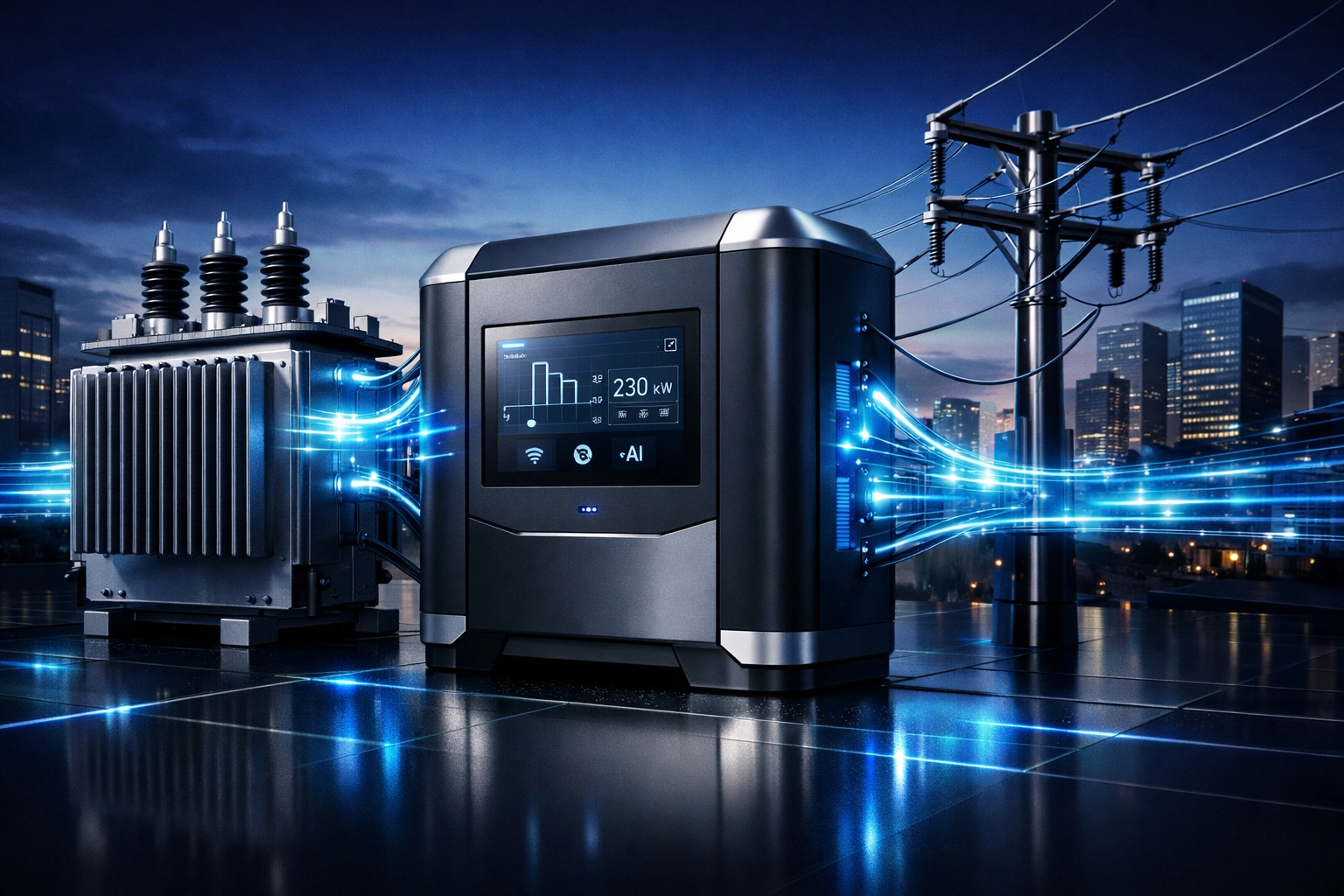
What sets the Pulse Box™ apart is its alignment with the Smart Metering ecosystem. It doesn't just sit there; it communicates.
- AI-Enabled Theft Detection: By comparing the total energy leaving the DT with the aggregated energy recorded by consumer smart meters, the system can pinpoint "leakage" or theft in real-time.
- Real-Time Load & Leakage Monitoring: Utility engineers receive instant alerts if a feeder is overloading or if there is a dangerous earth-leakage current.
- Remote Isolation: In the event of an emergency or a persistent fault, the system allows for the remote disconnection of specific feeders, protecting the transformer and the public.
You can explore our full range of Intelligent Infrastructure Solutions here.
07. Quantifiable Benefits for Utilities and Society
The transition to a Smart LT Interface like the Pulse Box™ delivers multi-dimensional value.
Public Safety and Welfare
By using non-conductive materials and tamper-proof designs, utilities can drastically reduce the number of electrical fatalities. Aligning with Central Electricity Authority (CEA) safety regulations and Bureau of Indian Standards (BIS) guidelines, this technology creates a "fail-safe" environment in public spaces.
Operational Efficiency
- Reduced DT Failure: Aiming to bring Indian DT failure rates down from 15% toward the global 2% standard.
- Predictive Maintenance: Instead of waiting for a "no power" complaint, utilities can identify heating or overloading issues before they lead to a blackout.
- Revenue Protection: A significant reduction in commercial losses by eliminating easy points of energy theft.
| Feature | Conventional MS Box | Pulse Box™ (Smart LT) |
|---|---|---|
| Material | Mild Steel (Conductive) | SMC/Hybrid (Non-conductive) |
| Corrosion | High | Zero |
| Safety | High risk of shock | Electric shock protection |
| Visibility | None (Blind spot) | Real-time IoT monitoring |
| Theft Deterrence | Low | High (AI-detected) |
08. The Case for Pilot Programs
For DISCOM leadership and policymakers, the path forward involves data-backed validation. Implementing Pilot Programs for Smart LT Distribution Boxes allows utilities to:
- Measure the reduction in DT failure rates in high-loss areas.
- Quantify the improvement in reliability (SAIDI/SAIFI indices).
- Assess the durability of SMC enclosures in extreme weather conditions.
These pilots serve as the blueprint for national-scale deployment, ensuring that infrastructure investment is mapped to tangible safety and financial outcomes.
09. Conclusion: A Safer, Smarter Future
The modernization of India's power grid is a marathon, not a sprint. While we have made incredible strides in generation and high-voltage transmission, the "last mile" at the LT interface remains the final frontier.
By replacing aging, hazardous metal boxes with intelligent, non-conductive systems like the Pulse Box™, we are doing more than just protecting equipment. We are protecting lives, securing revenue, and building the foundation for a truly resilient India. As we look toward a future of 24/7 power for all, we must ensure that the infrastructure delivering that power is as smart and safe as the meters measuring it.
Public safety begins at the transformer.