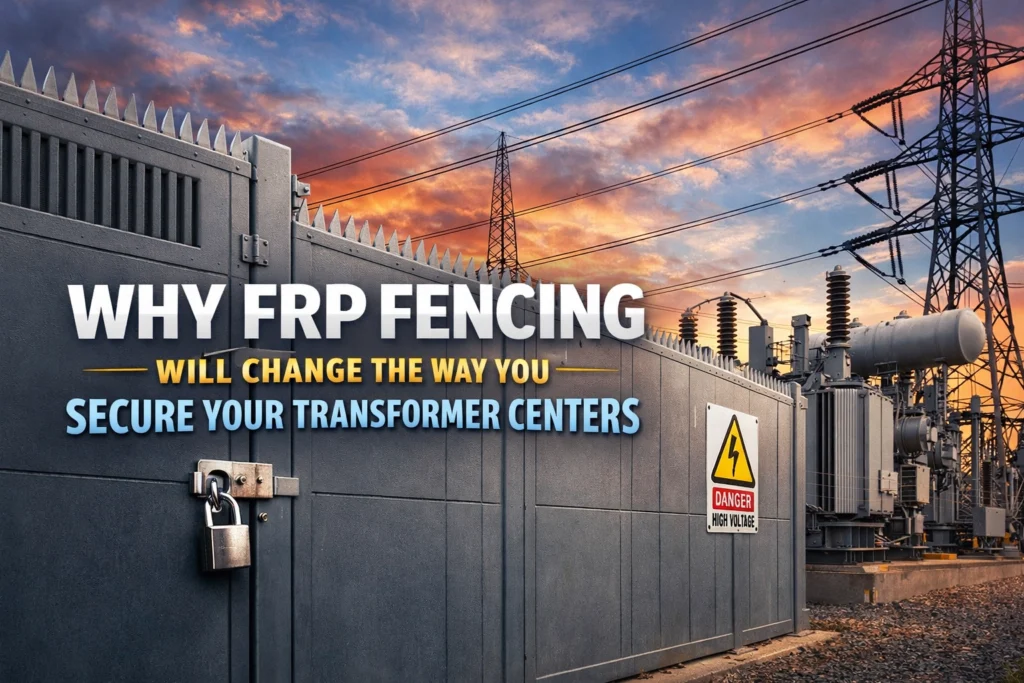
For decades, the standard operating procedure for securing electrical infrastructure has relied on a flawed material: metal. Whether it is Mild Steel (MS) or chain-link fencing, the traditional approach to safeguarding transformer centers and substations is increasingly becoming a liability for modern DISCOMs and EPC contractors.
The reality on the ground is stark. Metal fences corrode, conduct electricity during faults, and require constant, expensive maintenance. In an era where power utilities are under immense pressure to reduce AT&C (Aggregate Technical and Commercial) losses and improve safety ratings, sticking to legacy materials is no longer a viable strategy.
At RMC Switchgears Ltd., we have spent over 30 years innovating the LT (Low Tension) distribution landscape. We believe the future of grid security isn't just about what is inside the enclosure, but the perimeter that protects it. This is why Fiber Reinforced Polymer (FRP) fencing is not just an alternative: it is the definitive game-changer for transformer center security.
01. The Ground Reality: Why Traditional Fencing Fails
Traditional metal fencing presents a "Consequence Chain" of failures that directly impacts a utility’s bottom line.
- The Safety Hazard: Metal is a conductor. In the event of a transformer leak, insulator failure, or a snapped conductor touching the perimeter, the entire fence becomes energized. This creates a lethal risk of electrocution for maintenance staff and the general public.
- The Corrosion Cycle: Electrical infrastructure is often exposed to harsh environments: humidity, coastal salt air, and industrial pollutants. Metal fences begin to oxidize almost immediately. To prevent total structural failure, utilities are forced into a perpetual cycle of scraping and painting, which drains OPEX budgets.
- The Security Gap: Chain-link fences are easily breached or cut. Furthermore, because they lack high visibility, they do not serve as an effective psychological or physical deterrent in crowded urban environments.

02. Electrical Isolation: Safety as a Structural Feature
The most compelling reason to switch to FRP fencing is its inherent non-conductivity. Unlike steel, FRP is a dielectric material.
Technical Precision: FRP fencing provides a dielectric strength exceeding 12kV/mm. This means that even in high-voltage environments, the perimeter fence remains "cold" and safe to touch, regardless of internal equipment failures.
For DISCOMs, this eliminates the need for complex grounding and earthing of the fence itself: a requirement for metal barriers that is often poorly executed or fails over time due to soil corrosion. By choosing a non-conductive barrier, you are removing the risk of "step and touch" potential hazards, drastically improving your safety compliance metrics.
03. The Durability Dividend: 50+ Years of Service Life
When evaluating infrastructure investments, the Total Cost of Ownership (TCO) is the only metric that matters. Traditional metal fencing might have a lower initial procurement cost, but its lifespan in corrosive environments is often limited to 5-10 years before significant degradation occurs.
FRP fencing, by contrast, is engineered for longevity:
- Corrosion Resistance: It is impervious to moisture, salt, and most industrial chemicals. It does not rust, peel, or flake.
- UV Stability: Our pultruded panels are treated with UV inhibitors, ensuring they maintain structural integrity and color even under the harsh Indian sun.
- Zero Maintenance: There is no need for annual painting or rust-proofing. A simple wash with water is enough to maintain the installation for decades.

04. High Visibility and Public Safety: The 'Safety Yellow' Advantage
Transformer centers are often located in high-traffic residential or commercial areas. Visibility is a critical component of risk mitigation.
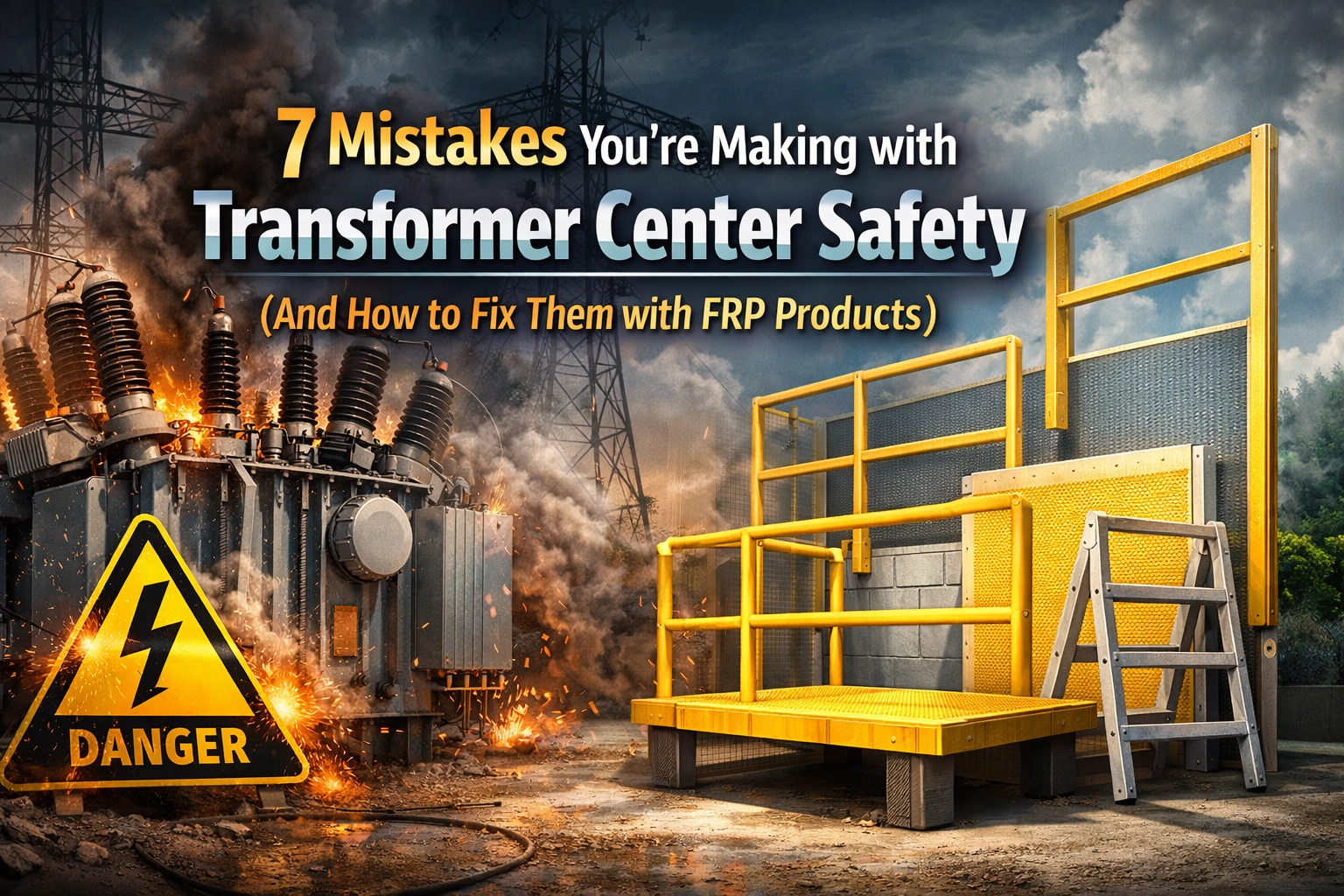
RMC’s FRP fencing utilizes 'Safety Yellow' pultruded panels. This isn't just an aesthetic choice; it is a deliberate safety feature. The high-contrast color provides an immediate visual warning to the public, signaling the presence of high-voltage equipment.
Furthermore, the modular design of our FRP fencing allows for the integration of permanent, non-fading warning signs and anti-climb textures. This proactive approach to security reduces unauthorized access and minimizes the likelihood of accidents that could lead to litigation and reputation damage for the utility.
05. Installation Efficiency: Reducing Deployment Time by 40%
For EPC contractors, time is money. Traditional masonry or heavy steel fencing requires significant labor, specialized welding equipment, and long curing times for foundations.
FRP fencing offers a modular, lightweight solution:
- Weight Advantage: FRP is approximately 25% the weight of steel. This allows for easier transportation to remote sites and manual handling without the need for heavy cranes.
- Modular Assembly: The fencing components are pre-engineered to fit together seamlessly. This "Lego-like" assembly means that a perimeter can be secured in nearly half the time required for traditional methods.
- Minimal Tooling: No welding or heavy cutting is required on-site, reducing the risk of fire hazards in sensitive electrical zones.
Comparing the Standards: FRP vs. Metal Fencing
| Feature | Traditional Metal Fencing | RMC FRP Fencing |
|---|---|---|
| Conductivity | High (Requires Earthing) | Zero (Non-Conductive) |
| Corrosion Resistance | Poor (Rusts easily) | Excellent (Rust-proof) |
| Maintenance | High (Periodic Painting) | Virtually Zero |
| Weight | Heavy (Hard to handle) | Lightweight (Easy install) |
| Visibility | Low (Grey/Metallic) | High (Safety Yellow) |
| Life Expectancy | 10-15 Years | 50+ Years |
06. The RMC Legacy: 30 Years of Innovation
Choosing the right partner for your infrastructure needs is as important as choosing the right material. At RMC Switchgears Ltd., our commitment to sustainability and innovation is backed by decades of experience in the Indian power sector.
Our manufacturing processes are designed to deliver precision-engineered FRP components that meet international standards. We understand the specific challenges faced by Indian DISCOMs: from extreme weather conditions to the need for rapid grid expansion. This expertise is why we have been recognized globally, including receiving the Forbes Asia 'Best Under A Billion' award.

Strategic Implementation: How to Modernize Your Perimeter
Transitioning to FRP fencing is a straightforward process when integrated into your projects and innovations pipeline. We recommend a phased approach:
- Assessment: Identify high-risk transformer centers in coastal, high-humidity, or densely populated urban zones.
- Pilot Deployment: Replace aging metal fences with modular FRP units to measure the reduction in maintenance costs and installation time.
- Standardization: Update procurement specifications to prioritize non-conductive, low-maintenance materials for all new substation and transformer installations.
Conclusion: Investing in a Smarter, Safer Grid
The shift toward FRP fencing is a move away from reactive maintenance and toward proactive asset management. By eliminating the risks of corrosion and electrocution, utilities can focus their resources on what really matters: reliable power delivery and grid modernization.
As we continue to build the digital and physical infrastructure of the future, the perimeter must be as smart and resilient as the technology it protects. FRP fencing is the logical choice for any DISCOM or EPC contractor looking to secure their assets for the next half-century.

Ready to upgrade your infrastructure security?
Explore our full range of products and solutions or contact us today to discuss how RMC Switchgears can support your next project with high-performance FRP fencing solutions. Let’s build a safer, more efficient grid together.