Quick answer
An RDSS tender funds smart metering, network strengthening, and sometimes the LT layer between the distribution transformer and the consumer — but central assistance is results-linked, released only when the utility meets reform benchmarks, not simply when equipment is delivered. Read the tender for three things: what the scheme funds, what the utility funds alongside it, and which obligations are tied to outcomes.
Who this is for: DISCOM tender-evaluation teams, EPC bid teams and OEMs preparing or assessing a response to an RDSS tender.
Is there an RDSS Phase 2?
No — not as an official scheme designation. The Ministry of Power’s published material describes RDSS in two parts, Part A and Part B, not in numbered phases. “Phase 2” is a search term people use informally for later tender rounds or later years of the scheme. If a tender or a vendor refers to “Phase 2,” confirm what specific sanction or tranche they mean — the term itself carries no defined scope. For current scheme sanctions, check the Ministry of Power’s RDSS portal directly.
Key takeaways
- RDSS was designed measurement-first, and that was the right design. Metering is the foundation the rest stands on.
- Central assistance is tied to pre-qualifying criteria and reform benchmarks — not delivery alone — so outcomes matter to the utility as much as equipment does.
- Tender content usually falls into three groups: metering, network strengthening, and the LT layer between the measurement points.
- Loss reduction depends on billing integration, collection and enforcement as well as hardware. Obligations should say who carries which part.
- The LT layer between the distribution transformer and the consumer may or may not be in a tender’s scope. Establish it explicitly, not by assumption.
Key terms at a glance
A short glossary, since RDSS tenders mix scheme language with network-engineering terms.
| Term | What it means in this context |
| RDSS | Revamped Distribution Sector Scheme — a Government of India programme launched July 2021 to improve DISCOM operational efficiency and financial sustainability. |
| Part A | The RDSS component funding prepaid smart metering, system metering, and distribution infrastructure upgrades. |
| Part B | The RDSS component funding training, capacity building and other enabling activities. |
| AT&C loss | Aggregate Technical & Commercial loss — the combined share of energy lost to network inefficiency (technical) and to non-payment or theft (commercial). |
| DT | Distribution transformer — steps voltage down for final delivery; a key metering and monitoring point under RDSS. |
| LT layer | The low-tension network between the DT and the consumer: poles, distribution boxes, service cables and joints — the zone RDSS metering does not, by itself, instrument. |
| SBD | Standard Bidding Document — the Ministry-issued template utilities use to structure RDSS metering tenders, including data-security and DPDP Act provisions. |
| Results-linked funding | RDSS assistance that is released only once a utility meets pre-qualifying criteria and reform benchmarks — not simply once equipment is delivered. |
What does RDSS fund?
The Revamped Distribution Sector Scheme (RDSS) was launched in July 2021. According to the Ministry of Power (PIB release 1897764, 9 February 2023), it was designed as a five-year programme, FY2021-22 to FY2025-26, aimed at bringing aggregate technical and commercial (AT&C) losses down to a pan-India level of 12–15%, and at closing the gap between the average cost of supply and the average revenue realised, by 2024-25.
The scheme has two funding components:
- Part A: financial support for prepaid smart metering and system metering, and for upgrading distribution infrastructure.
- Part B: training, capacity building and other enabling and supporting activities.
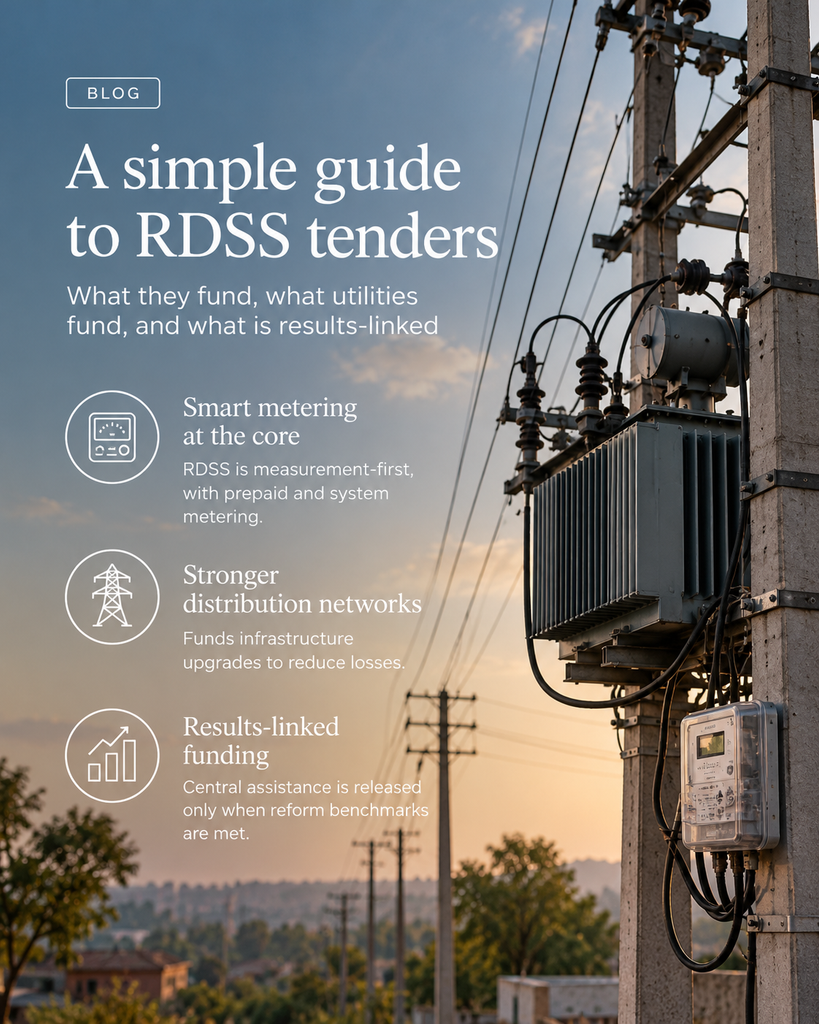
The defining feature is how assistance is released. In the Ministry’s own words, financial assistance is provided “based on meeting pre-qualifying criteria and achieving basic minimum benchmark in reforms.” RDSS is results-linked, and that is what most changes how a tender issued under it should be read.
According to the Ministry of Power (PIB release 2222217, 2 February 2026), smart metering has been sanctioned for 19.79 crore consumers, 52.53 lakh distribution transformers and 2.05 lakh feeders, across 45 distribution utilities in 28 States and Union Territories. By 31 December 2025, 3.90 crore smart meters had been installed under the scheme.
The same release reports that AT&C losses improved from 21.91% in FY2021 to 15.04% in FY2025, crediting the collective effort of states and a range of reforms, including smart metering.
The sequencing was deliberate and sound. You cannot manage a loss trajectory you cannot measure, and before RDSS many Indian networks could not measure theirs with confidence. The scheme’s measurement-first design is the right design — worth saying plainly, because it gets muddled in vendor material.
How to read an RDSS tender: three content groups
Tenders under RDSS are issued by the utilities themselves, so scope and structure vary from state to state. Where a specification becomes confusing is in telling apart what is funded under the scheme from what the utility is procuring alongside it. In practice, tender content falls into three groups.
| Tender content group | What it covers | Usually funded by |
| 1. Metering & systems | Smart consumer meters, DT/feeder meters, communication network, head-end system, meter data management | RDSS Part A |
| 2. Network strengthening | Feeder bifurcation, reconductoring, new substations, transformer augmentation, HT/LT line work | RDSS Part A |
| 3. The LT layer between measurement points | Distribution boxes, service cables, joints — the network between the DT meter and the consumer meter | Varies by utility — confirm per tender |
1. Metering and the systems behind it
Smart consumer meters, DT and feeder meters, communication infrastructure, head-end systems and meter data management. This is the core of Part A, and the standards are mature. The Ministry of Power notes that the Standard Bidding Document for smart metering works sets out provisions on data security and cyber threats, including compliance with the Digital Personal Data Protection Act. In a tender, this section is usually the longest and the most prescriptive.
2. Network strengthening
Infrastructure upgrades under Part A: feeder bifurcation, reconductoring, new substations, transformer augmentation, and HT and LT line work, depending on what the utility’s plan includes. This is where network capacity and condition improve, and it is where technical loss comes down. It is capital-heavy.
3. What sits between the measurement points
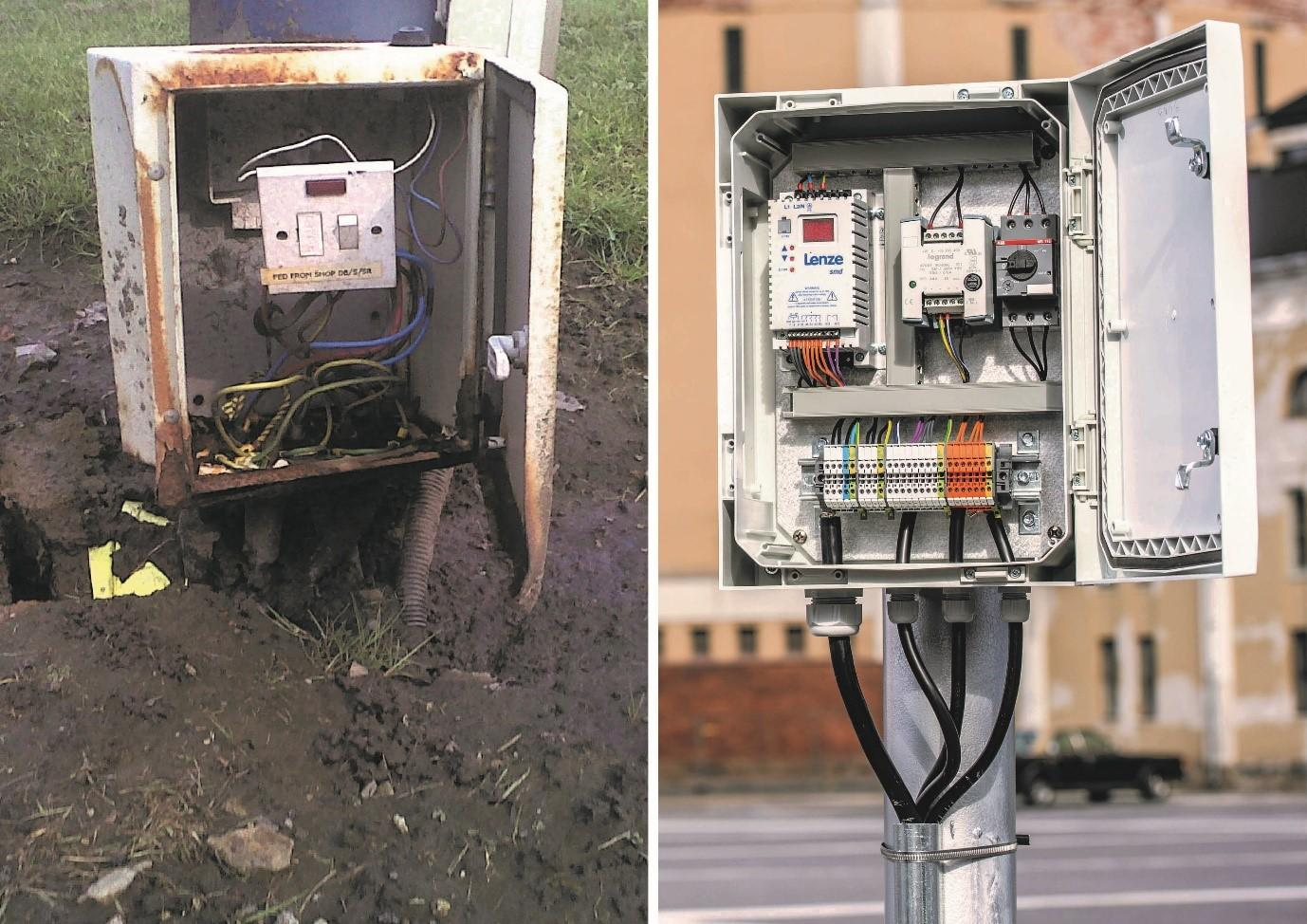
This is the part worth reading carefully. The metering programme establishes measurement at the distribution transformer and at the consumer. The network between those two points — the LT distribution layer, where the poles, distribution boxes, service cables and joints sit — is not something a meter at either end describes.
That is not a criticism of the scheme’s design. Metering at DT and consumer level is exactly what a results-linked programme needs to verify results, and it was the right first priority. It does mean a utility working to a loss trajectory may find some of its remaining loss sits in a layer its new metering was not built to characterise. What meters at each end can and cannot see is covered in power theft detection: what meters catch and what they miss.
Establish LT-layer scope explicitly rather than assuming it, in either direction — some tenders include it, many don’t.
Why does results-linked funding change risk?
In a conventional procurement, a supplier delivers specified equipment to a specified standard, and the obligation is discharged. In a results-linked frame, delivery is necessary but not sufficient. The utility’s assistance depends on reforms and a trajectory, and a loss trajectory depends on a great deal that no single supplier controls.
What actually decides whether AT&C loss falls after a metering rollout:
- whether billing systems consume the new data correctly;
- whether the collection process improves alongside measurement;
- whether enforcement follows detection;
- whether the network’s technical loss is addressed separately, which needs its own analysis (see technical vs commercial loss);
- whether unmetered categories are resolved.
Hardware influences the first of these. It does not decide any of the others.
A tender that appears to place outcome risk on equipment supply deserves careful reading. It is legitimate for a utility to structure procurement that way, and reasonable for a supplier to price that risk or seek to bound it. Both sides are better served when the boundary is explicit from the start rather than discovered later.
Questions to settle before bidding or awarding
| Question | Why it matters |
| Is the obligation linked to delivery or to outcomes? | Decides who carries loss-trajectory risk |
| What is the measurement baseline, and who set it? | An improving figure may reflect better measurement, not a better network |
| Are unmetered categories resolved within scope? | Unmetered supply leaves energy accounting incomplete by design |
| Where do LT-layer conditions sit: in scope, out of scope, or unstated? | Decides whether remaining loss can be located after the rollout |
| What integration with existing billing systems is required? | Weak integration can leave a technically sound rollout with no change in revenue |
| Who owns data quality after commissioning? | Meters that stop communicating push the account back to estimates |
A metering rollout that does not connect properly to billing produces good data and no change in realised revenue. Data-quality ownership matters more with every year of operation — as smart metering moves from installation to use, the value is in data that keeps arriving. Our view of where that leads is in what India’s next 10 years of smart metering will actually look like.
How should vendors talk about the scheme?
There is a temptation in this market to position new equipment by suggesting the metering investment fell short. That framing is wrong, and it is commercially self-defeating.
It is wrong because measurement was the correct first priority, and the scheme is delivering it at very large scale. It is self-defeating because the engineers who specified and installed that metering are the same engineers who make the next decision.
The accurate framing is sequential, not corrective. The metering programme establishes what is consumed and where billing and supply disagree. The next question — where in the network the loss physically occurs — is a different measurement at a different location. One follows the other. Neither replaces the other.
Declaring our interest
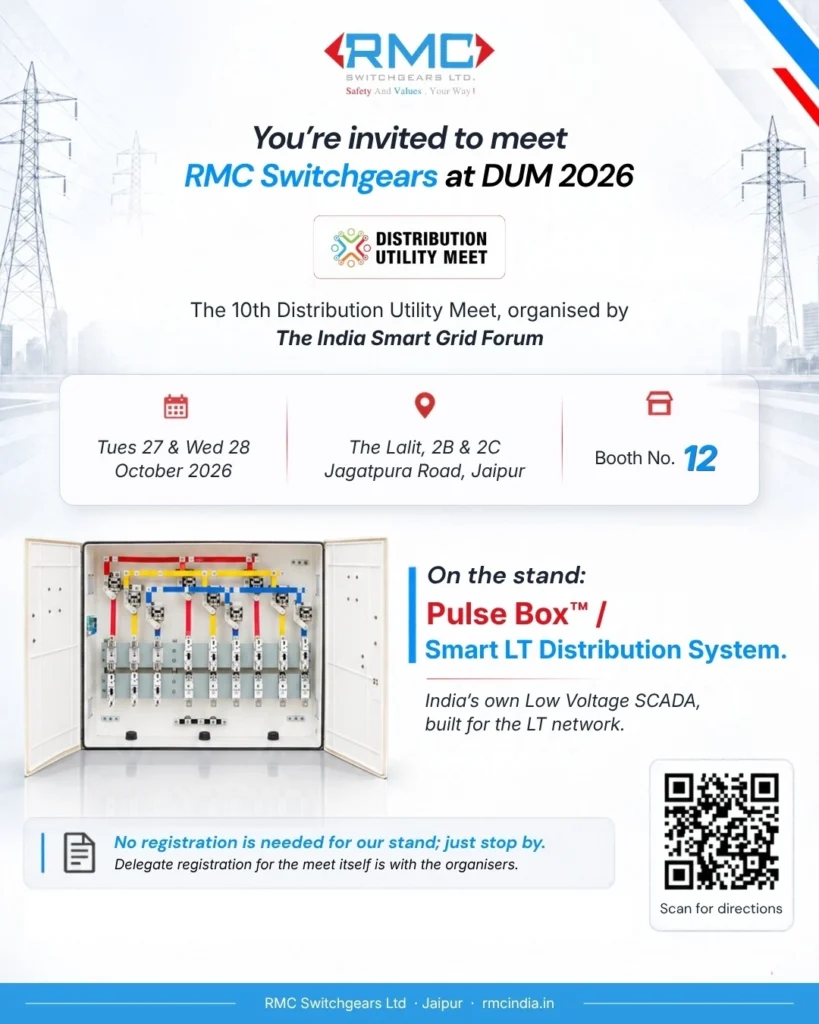
RMC Switchgears Limited makes the Pulse Box™ / Smart LT Distribution System, designed for the LT layer between the distribution transformer and the consumer.
Pulse Box™ monitors leakage current and flags abnormal conditions. Its product page lists continuous monitoring of harmonics, phase imbalance, power factor, temperature and leakage current. It complements smart meters. It does not replace metering, protection relays or the network works that RDSS funds.
Frequently asked questions
What is the RDSS scheme?
The Revamped Distribution Sector Scheme (RDSS) is a Government of India programme, launched in July 2021, to improve the operational efficiency and financial sustainability of electricity distribution utilities. It funds prepaid smart metering, system metering and distribution infrastructure upgrades, plus training and capacity building. Assistance is linked to utilities meeting pre-qualifying criteria and reform benchmarks.
What does an RDSS tender fund?
Part A funds prepaid smart consumer metering, system metering at feeder and distribution-transformer level, and upgrades to distribution infrastructure. Part B funds training, capacity building and other enabling activities. The exact scope in any tender depends on the utility’s sanctioned plan, so read the tender itself rather than assuming the full list applies.
Is there an RDSS Phase 2?
The Ministry of Power’s published material describes RDSS in two parts, Part A and Part B, not in numbered phases. “Phase 2” is sometimes used informally for later tender rounds or later years of the scheme. For the current scheme period and sanctions, check the Ministry of Power’s RDSS portal and its latest press releases before relying on any date.
What does “results-linked funding” mean for an RDSS tender?
It means central assistance depends on the utility meeting pre-qualifying criteria and basic reform benchmarks, not only on equipment being delivered. That matters commercially because loss reduction depends on billing integration, collection and enforcement as well as hardware. Tenders should make clear whether an obligation is tied to delivery or to outcomes.
Does RDSS metering cover the LT distribution network?
The programme establishes metering at distribution-transformer and consumer level. The LT network between those two points — poles, distribution boxes, service cables and joints — is a separate question. Whether instrumenting it falls within a particular tender’s scope varies from utility to utility, so it is worth establishing explicitly.
Why do metering rollouts sometimes not reduce AT&C losses?
Most often because the data does not connect properly into billing and collection, because unmetered categories remain unresolved, or because the remaining loss is technical and needs network investment rather than more measurement. Smart meters make the loss measurable. Reducing it takes process, enforcement and network work alongside them.
What’s the difference between RDSS Part A and Part B?
Part A is the capital-and-hardware component: prepaid smart metering, system metering, and distribution infrastructure strengthening. Part B is the capacity-building component: training and other enabling activities for utility staff. Most tender specifications a supplier or EPC contractor responds to sit under Part A.
What should a bidder confirm before responding to an RDSS tender?
Three things, in writing if possible: whether the obligation is linked to delivery or to results, where the LT layer between the DT and the consumer sits in scope, and who owns data quality and billing integration after commissioning. These three are where most disputes on results-linked contracts originate.
Where to start: a five-minute scope check
Before bidding on or evaluating an RDSS tender, write down three things:
- What the scheme funds in this tender (Part A, Part B, or both).
- What the utility is funding alongside it, outside the scheme.
- Which specific obligations are linked to outcomes rather than delivery.
Most disputes on results-linked contracts trace back to those three not being separated at the start. It is a short exercise, and far cheaper than the alternative.
If the LT layer between the distribution transformer and the consumer is in scope for your tender, ask for the Pulse Box™ datasheet.
Sources
1. Ministry of Power, Government of India launches Revamped Distribution Sector Scheme (RDSS), PIB release ID 1897764, 9 February 2023: scheme design, aims, Part A and Part B, basis of assistance.
2. Ministry of Power, Progress on smart meter installation under RDSS, PIB release ID 2222217, 2 February 2026: launch date, sanctioned and installed meters, AT&C figures, Standard Bidding Document provisions.
3. Ministry of Power, RDSS portal. https://rdss.powermin.gov.in/
4. Pulse Box™ product page.
About RMC Switchgears
RMC Switchgears Limited, based in Jaipur, develops electrical distribution, enclosure and safety solutions for utilities, EPC contractors and infrastructure customers across India. Its portfolio spans metallic and composite enclosures, FRP safety solutions, LT distribution equipment and intelligent LT-network solutions, including Pulse Box™.