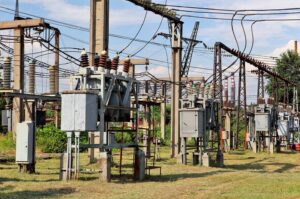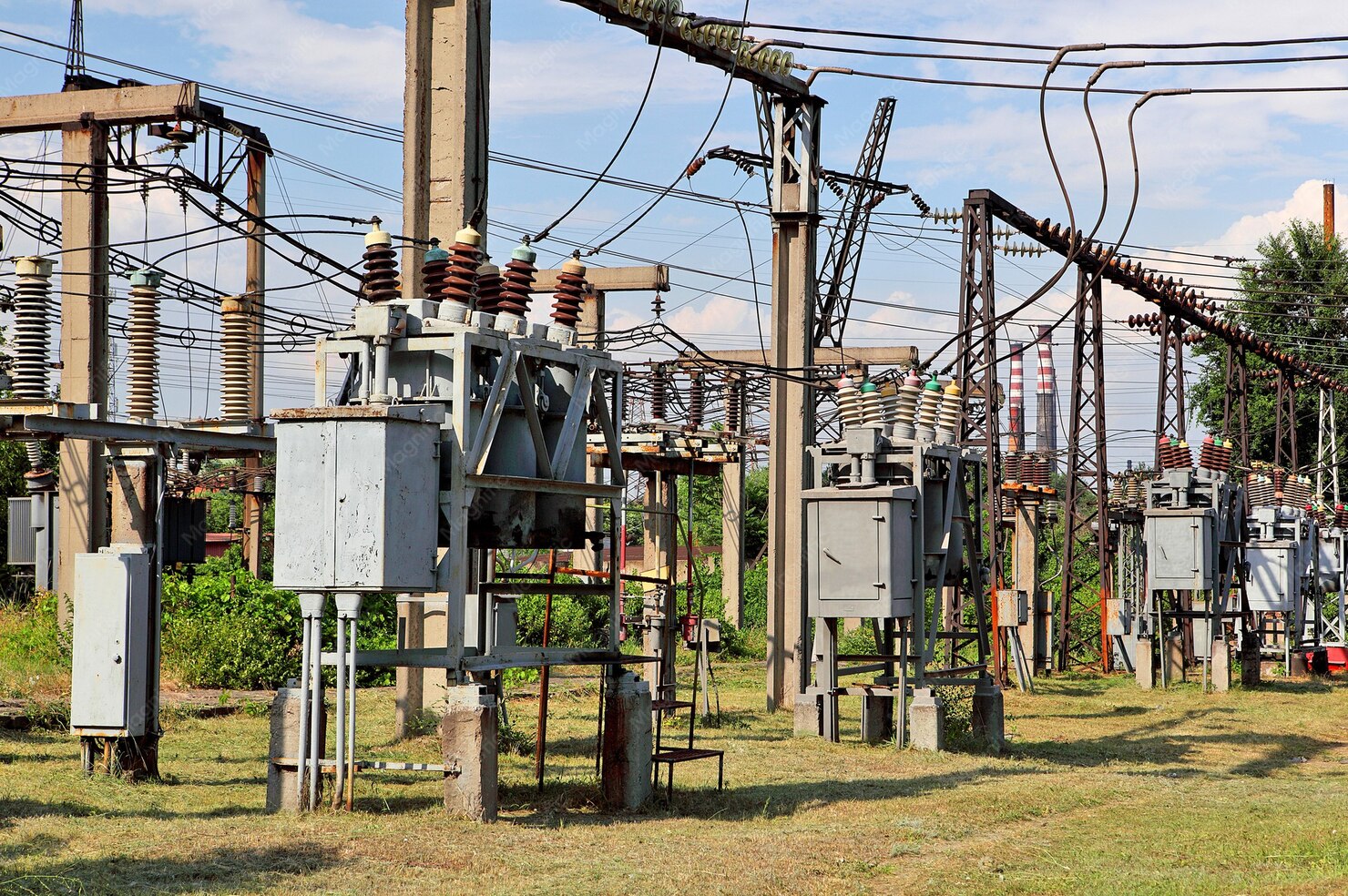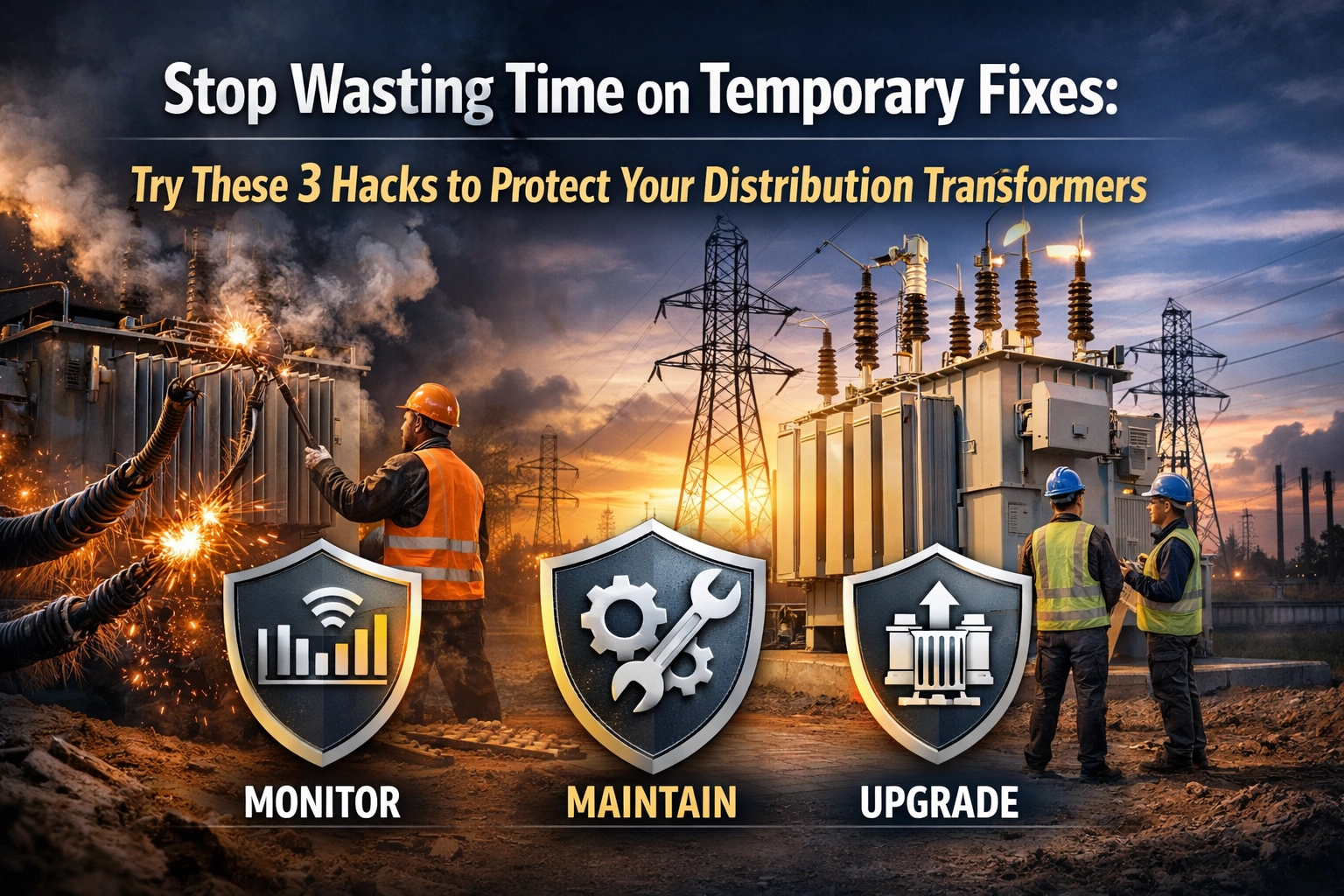
Distribution Transformer (DT) centers are the lifeblood of the power grid. They are the final stage of power delivery before electricity reaches the consumer. Yet, across the country, these critical assets are often the most neglected. Look at any average DT center, and you will likely see a patchwork of "temporary fixes": rusted metal fences, makeshift plastic covers on bushings, or even thorn bushes used as a deterrent.
These temporary solutions are not just inefficient; they are dangerous. They lead to frequent outages, high maintenance costs, and significant safety hazards. At RMC Switchgears Ltd., we have spent over 30 years researching why these assets fail and how to protect them permanently.
If your utility or contracting firm is still relying on "jugaad" to protect multi-lakh-rupee equipment, you are effectively burning money. Here are 3 RMC-backed "hacks": long-term, engineered solutions: that replace temporary patches with permanent reliability.
The Ground Reality: The High Price of "Temporary"
Before we dive into the solutions, we must understand the Consequence Chain of poor transformer protection. When a utility opts for a cheap, temporary fix, it sets off a domino effect:
- Technical Failure: A makeshift cover degrades under UV radiation or a metal fence rusts and becomes conductive.
- External Interference: A bird or small animal touches an exposed bushing, or a passerby accidentally contacts a live fence.
- The Trip: The transformer trips, causing a localized blackout.
- Financial Loss: Beyond the cost of the repair crew, the utility loses revenue for every minute of downtime.
- Asset Degradation: Frequent tripping and thermal stress shorten the 25-year lifespan of a transformer to less than a decade.
By investing in high-quality products and solutions, you break this chain and secure the grid’s most vital nodes.

01. The Insulation Hack: FRP Transformer Bushing Covers
The most common cause of unplanned transformer outages is "animal-induced faults." Birds, squirrels, or monkeys often find their way onto the top of the transformer. In a makeshift setup, the bushings are either exposed or covered with substandard plastic that becomes brittle in months.
Why Temporary Fixes Fail:
Most "off-the-shelf" plastic covers are not rated for high-voltage insulation. They crack under the intense Indian sun (UV degradation) and allow moisture to seep in. Once a cover fails, the gap between phases decreases, leading to flashovers during rain or high humidity.
The RMC Solution:
Our FRP (Fiber Reinforced Polymer) Transformer Bushing Covers are engineered to stop trips before they happen.
- High Dielectric Strength: Designed to withstand high voltage without breakdown.
- UV and Weather Resistance: Unlike cheap plastics, our FRP compounds are tested to endure decades of extreme heat and heavy monsoons.
- Animal-Proof Design: These covers completely encapsulate the live parts, ensuring that even if wildlife lands on the transformer, a phase-to-ground or phase-to-phase fault is impossible.
The Result: A 90% reduction in animal-related tripping incidents and a significant increase in public safety.
02. The Security Hack: Bright Safety Yellow FRP Fencing
Traditional protection for a DT center usually involves Galvanized Iron (GI) fencing or, in many cases, a simple brick wall. While these seem like permanent solutions, they carry hidden risks that lead to long-term costs.
Why Traditional Fencing Fails:
GI fencing is conductive. If a stray wire touches the fence or if there is a leakage, the entire perimeter becomes a death trap. Furthermore, GI fences are prone to theft for scrap value and require regular painting to prevent rust.
The RMC Solution:
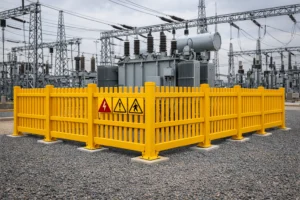
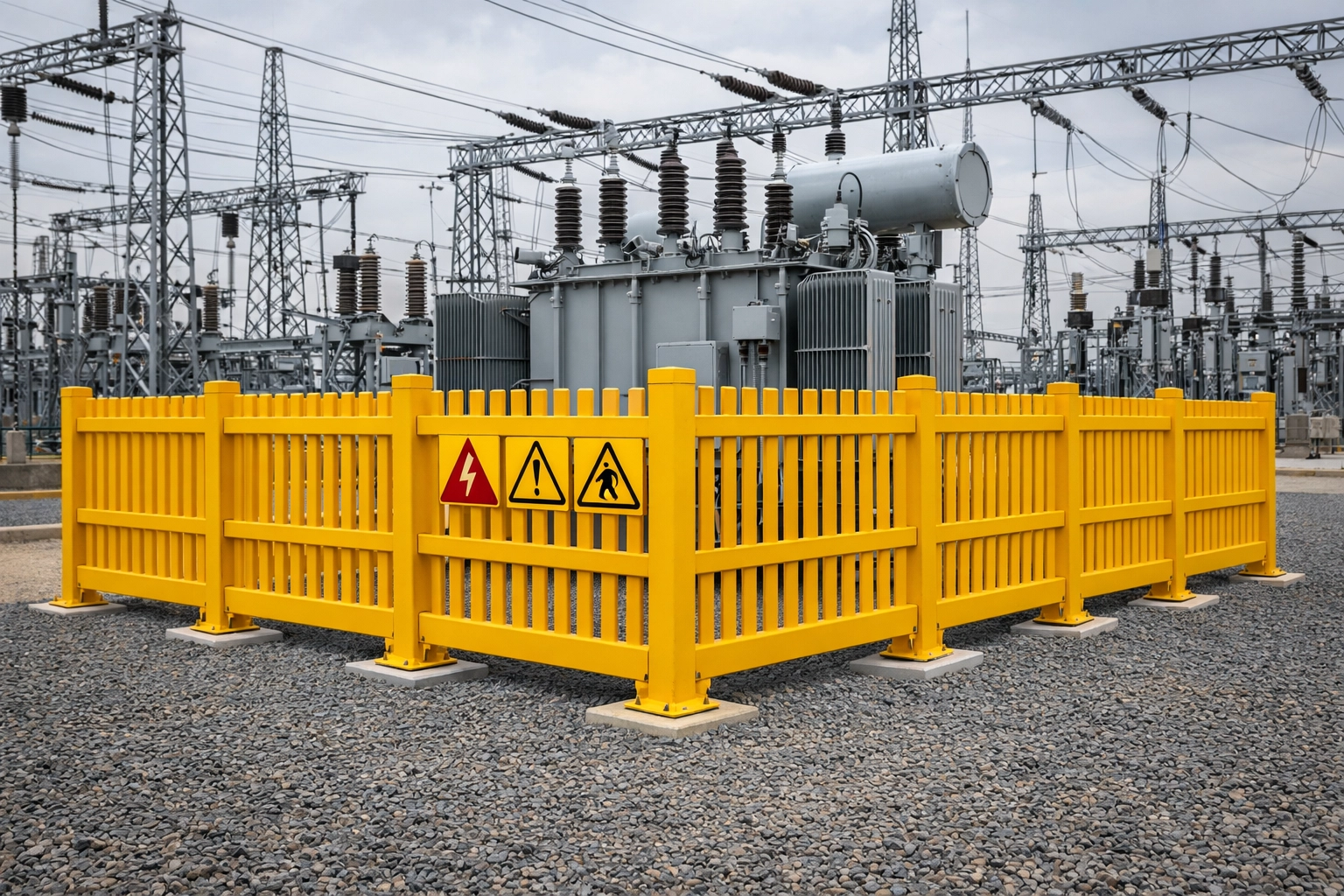
Switch to Safety Yellow FRP Fencing. This is one of the most effective "hacks" for modern grid safety.
- Non-Conductive Material: FRP is an insulator. Even if a live wire falls on the fence, there is zero touch potential risk for humans or livestock outside.
- High Visibility: The "Safety Yellow" color is integrated into the material during manufacturing. It doesn't peel or fade, providing a permanent visual warning to the public.
- Zero Maintenance: FRP does not rust. You don't need to paint it, and because it has no scrap value, it is rarely targeted by thieves.
| Feature | Traditional GI Fencing | RMC FRP Fencing |
|---|---|---|
| Conductivity | High (Dangerous) | Non-conductive (Safe) |
| Corrosion | High (Requires Painting) | Nil (Corrosion Proof) |
| Visibility | Low | High (Safety Yellow) |
| Scrap Value | High (Prone to Theft) | Nil (Secure) |
| Lifespan | 3-5 Years | 20+ Years |

Caption: A modern, secure Distribution Transformer center utilizing bright yellow FRP fencing for maximum safety and visibility.
03. The LT Interface Hack: Secure, Rust-Free Distribution Boxes
The Low Tension (LT) side of the transformer is where the most "jugaad" happens. Connections are often left exposed, or housed in thin sheet-metal boxes that rust through within two seasons. This is the primary site for AT&C (Aggregate Technical & Commercial) losses and power theft.
Why Temporary Enclosures Fail:
Sheet metal boxes corrode, leaving gaps that allow unauthorized access for power hooking. Moisture ingress in these boxes leads to terminal oxidation, which causes heating, energy loss, and eventually, the melting of cables.
The RMC Solution:
Our SMC/FRP Distribution Boxes are the gold standard for protecting vital connections.
- Tamper-Proof Design: Our boxes are designed to be impossible to bypass without leaving visible evidence, directly assisting in loss reduction.
- Corrosion-Free Integrity: Since the enclosure is made of high-grade FRP, it remains airtight and watertight for its entire service life.
- Fire Retardant: RMC’s enclosures are self-extinguishing and fire-retardant, preventing a minor spark from turning into a major transformer fire.
By securing the LT interface with a proper meter box or distribution enclosure, you protect the transformer from the imbalances and faults that occur downstream in the consumer network.
The Financial Logic: CAPEX vs. OPEX
Many decision-makers hesitate at the initial cost of FRP solutions compared to cheap metal alternatives. However, the data paints a different picture.
When you factor in the Total Cost of Ownership (TCO), temporary fixes are incredibly expensive.
- Repair Costs: The cost of sending a crew to replace a blown fuse or a damaged bushing every time a bird hits the transformer.
- Asset Replacement: Replacing a transformer costs lakhs. Extending its life by just 5 years through better protection pays for the FRP hardware ten times over.
- Revenue Loss: In a 2026 grid environment, reliability is a KPI. Frequent outages lead to penalties and dissatisfied consumers.
At RMC Switchgears, we emphasize sustainability and long-term value. Our 30+ years of R&D have been dedicated to creating "fit and forget" solutions. When you install an RMC product, you aren't just buying hardware; you are buying the peace of mind that comes from three decades of engineering excellence.

Why RMC Switchgears Ltd. is the Partner of Choice
We don't just manufacture boxes; we engineer reliability. Our commitment to quality has been recognized globally, most recently evidenced by our inclusion in the Forbes Asia 'Best Under A Billion' list. This recognition reflects our consistent growth and the trust that major utilities place in our technology.
Our manufacturing facilities are equipped with the latest in FRP and SMC compression molding technology, ensuring that every bushing cover, fence panel, and distribution box meets international standards for safety and durability.

Stop Patching, Start Protecting
The era of "temporary fixes" in the power sector must come to an end. As we move toward a smarter, more resilient grid, the physical infrastructure protecting our assets must be as advanced as the digital systems monitoring them.
Protecting your distribution transformers doesn't require a miracle: it requires a shift from short-term "jugaad" to long-term engineering. By implementing these three hacks: FRP bushing covers, safety yellow fencing, and secure distribution boxes: you can drastically reduce outages and protect both your equipment and the public.
Ready to upgrade your infrastructure?
Let’s discuss how RMC Switchgears Ltd. can help you eliminate temporary fixes and secure your grid for the next 20 years. Connect with our team today to explore our full range of transformer protection solutions or to discuss a pilot project for your utility.