RDSS Phase 2: why smart LT distribution is now critical to delivery
A state-level RDSS implementation officer told me: “We’ve met our smart meter target, we’ve deployed the DMS, we’ve got visibility into consumption. But AT&C losses barely moved. The data showed us the problem exists — it didn’t help us solve it.”
That gap — between measurement and action — is where RDSS Phase 2 runs into a wall. And it’s where intelligent secondary substation infrastructure becomes not optional but essential.
What RDSS actually committed to
In 2021, the Government of India announced the Revamped Distribution Sector Scheme: ₹3.03 lakh crores to modernise distribution. The funding sits across three pillars: infrastructure development (₹1.53 lakh crores), debt restructuring (₹1.12 lakh crores), and operational reforms (₹39,000 crores). The arithmetic is clear. The funding is real.
What is less often spelled out is what “modernisation” actually means in practice.
RDSS is not primarily about new poles and wires. It is about shifting distribution from measurement-based to visibility-based operations. Smart meters collect consumption data at granular intervals. Distribution management systems (DMS) provide visibility into primary feeder conditions. That is Phase 1.
Phase 2 — the active implementation window through 2026–2027 — extends that visibility to the secondary substation: the transformer and the LT distribution interface where power actually reaches consumers. This is where the measurement layer (smart meters, DMS) meets the action layer (protection logic, load coordination, loss prevention). The gap between these layers is where AT&C loss physically originates.
Where Phase 2 sits in the RDSS timeline
RDSS implementation follows a defined sequence:
Phase 1 (2021–2023): Smart meter rollout, initial planning. Most states completed 30–50% of mandated meter installations during this window. Utilities set up DMS platforms. Debt relief disbursement began.
Phase 2 (2023–2026): Distribution transformer replacement, secondary substation upgrades, full smart metering completion. This is the window where intelligent LT distribution becomes critical. DISCOMs are replacing 1.5 million transformers nationally and upgrading secondary substations to support the metering and DMS infrastructure deployed in Phase 1. The procurement window is open now — 2026–2027.
Phase 3 (2025–2027): AT&C loss reduction intensification and commercial loss detection scaling. By this point, DISCOMs have secondary-level visibility and can target specific feeders, consumers, and areas for loss recovery.
Phase 4 (2027–2030): Grid-side optimisation — demand-side flexibility, renewable integration, grid stabilisation using secondary-level intelligence as the foundation.
The three-year Phase 2 window is critical because the equipment procured now — transformers, protection relays, secondary substation enclosures — defines what operationally intelligent distribution looks like for the next 25 years.
The AT&C loss problem Phase 2 is built to solve
RDSS targets AT&C losses of 15% or below by scheme conclusion. Current DISCOM averages sit at 18–22%, according to Power Finance Corporation data. The loss reduction target is not arbitrary — it reflects the revenue recovery required for DISCOMs to become financially viable.
For a ₹2,000 crore revenue DISCOM operating at 20% AT&C losses, a 3% improvement means ₹60 crores in additional annual revenue. Scale that across 22 DISCOMs nationally and the cumulative benefit reaches several hundred crores annually.
But loss reduction requires visibility into where loss occurs. Smart meters show that loss happens (total consumption versus total generation). They do not show where loss happens. A secondary substation feeding fifty consumers with ten meters might show 30% loss in its jurisdiction. The smart meter data cannot pinpoint whether the loss is in the transformer, in the feeder lines, in unmetered connections, or in meter tampering.
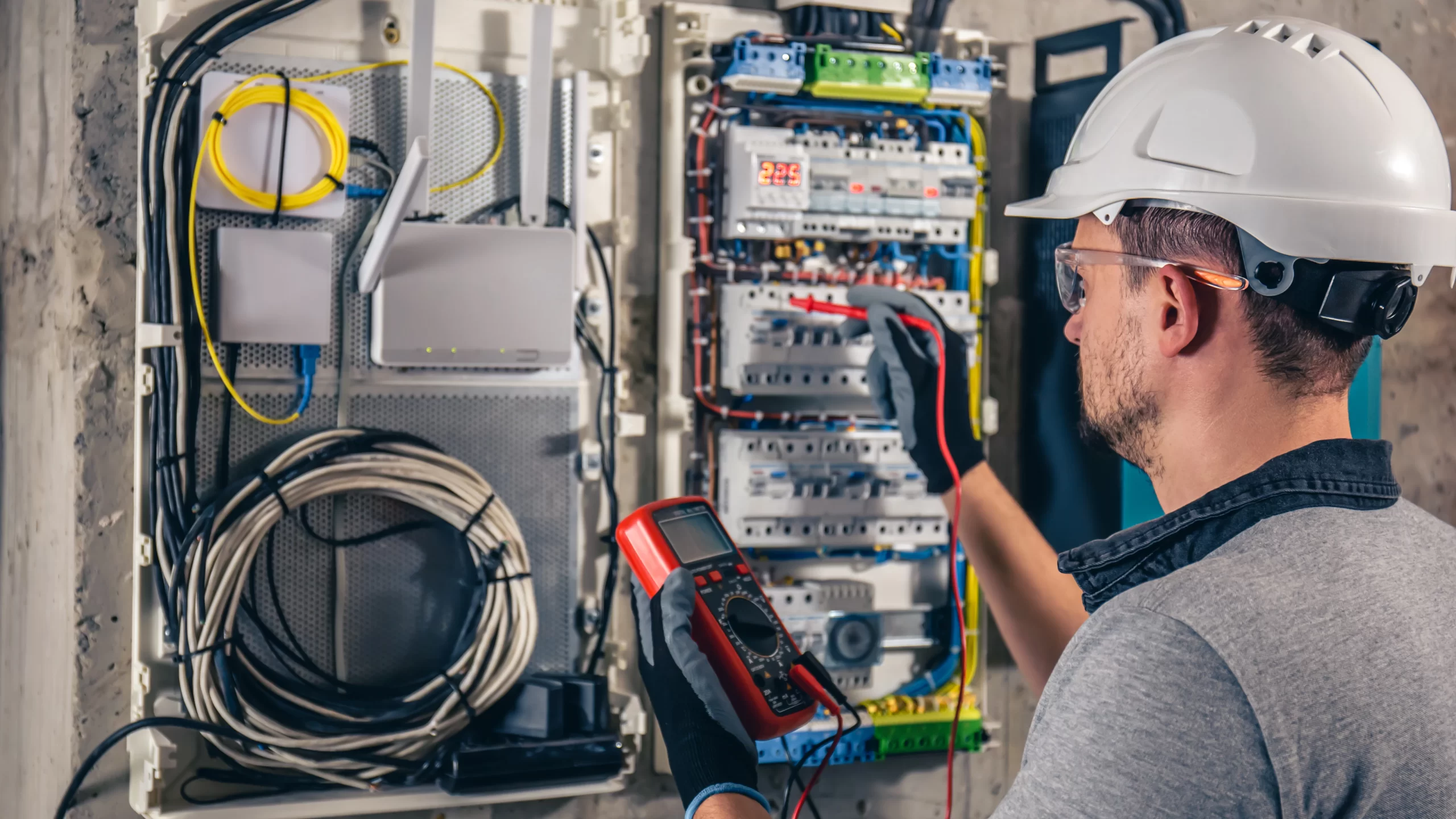
Intelligent secondary substation monitoring bridges this gap. Real-time measurement at the transformer level combined with meter-level consumption creates a localised balance sheet. Overload, leakage current, unbalanced phase loading, reactive power management — all become visible. Field teams can target loss-reduction interventions with precision rather than attempting broad fixes that may not address actual problems.
Why secondary substations became the critical node
Historically, RDSS funding focused on two points: smart meters at the consumer end and DMS visibility at the primary substation. Secondary substations — the transformer and the LT box sitting on the feeder — were left as passive infrastructure.
Three factors are changing that calculus for Phase 2:
First, renewable integration. India targets 500 GW renewable capacity by 2030. Much of this generation connects at secondary distribution level — rooftop solar, small wind, solar parks feeding into distribution networks rather than directly into transmission. Variable generation at the secondary level requires real-time coordination. A solar plant outputting 50 MW can drop to 30 MW in seconds when clouds pass overhead. Without secondary-level visibility, that generation variability propagates as voltage instability downstream. With intelligent secondary substations, the system anticipates generation changes and coordinates load response. This coordination is impossible without real-time LT-side data.
Second, safety regulation is tightening. State electricity regulators increasingly impose penalties for electrocution incidents in distribution areas, treating them as preventable system failures rather than unavoidable accidents. Neutral displacement, insulation degradation, improper earthing — the leading causes of electrocution — are all detectable with continuous LT-side monitoring. A DISCOM that implements secondary substation intelligence demonstrably reduces preventable deaths. Regulators reward this with relief from penalties; utilities that do not invest face escalating fines.
Third, operational efficiency at secondary level drives the unit economics. A transformer running overloaded is inefficient — higher losses, faster degradation, emergency replacement risk. A feeder with unbalanced loads suffers excess losses. A secondary substation with visibility into these conditions can make operational adjustments — load balancing, capacitor bank switching, demand response signalling — that reduce losses and extend asset life. These optimisations compound across thousands of secondary substations.
What the Nashik MSEDCL deployment is telling us about Phase 2
Pulse BoxTM has been running a pilot at a secondary substation in Nashik, operated by MSEDCL, for 30 days as of May 2026. The pilot is early — a single LT interface, limited data — but it is surfacing something that Phase 2 planners are noticing consistently: the four signals that secondary-level monitoring catches are the same signals that consume the most maintenance resources.
The four verified signals from the Nashik data are:
- Overload event patterns — feeders running consistently above design capacity, invisible in monthly smart meter reads but visible in 15-minute intervals
- Leakage current behaviour ahead of fault — gradual changes in earth-leakage signature that precede insulation breakdown
- Voltage stability at LT — phase-to-phase variations that explain downstream consumer equipment trips
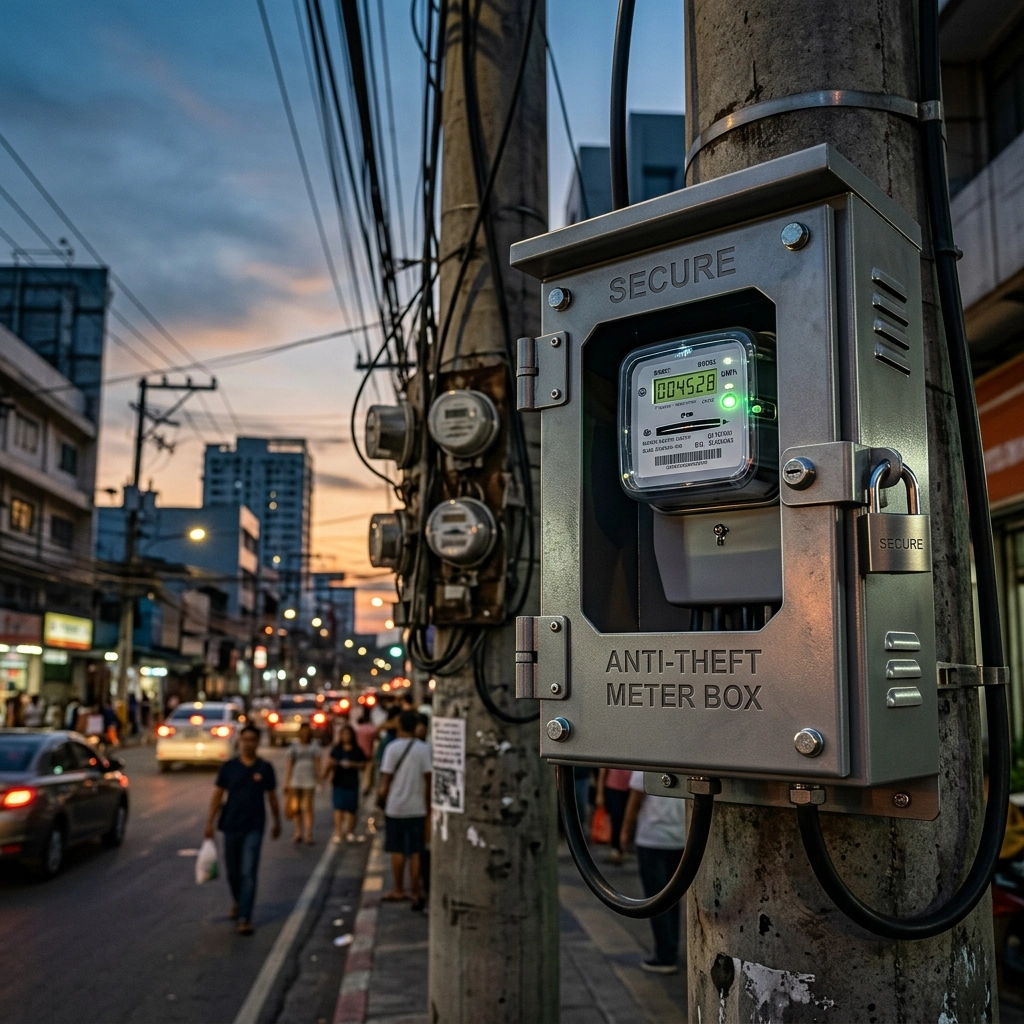
- Physical tamper signals — enclosure access events with timestamp and duration
None of these signals is exotic. Any Chief Engineer reading this list will recognise them as signals they monitor intuitively if they have time. The point the Nashik deployment proves is that the monitoring is now economically viable at secondary substations, scaled across networks, not just at primary substations with dedicated instrumentation.
Practical implications for Phase 2 procurement and state-level rollout
RDSS funding flows to states, and states allocate that funding across utilities. The procurement pathways vary by state, but the pattern is clear: Phase 2 procurement windows for secondary substation upgrades are opening in 2026 and closing by 2027. A utility that specifies intelligent secondary infrastructure now positions itself for the scale deployment of 2027–2029. A utility that delays faces obsolescence — competing utilities will have established vendor relationships, proven deployment models, and documented performance.
Three practical decisions utilities face in 2026:
First, secondary substation standardisation. What does a “modern” secondary substation actually look like? What equipment goes in it? What integration requirements connect it to the DMS? States like Maharashtra and Tamil Nadu are drafting technical specifications now. Early specification locks in standards; late specification means retrofitting to someone else’s standard. Utilities involved in specification-writing have influence; utilities that wait have to adapt to specifications written for other utility topologies.
Second, vendor qualification. Which vendors can deliver intelligent secondary enclosures at scale, on time, with documented performance? The vendor landscape is still developing. Utilities that conduct pilot deployments with 2–3 qualified vendors in 2026 will have real performance data by 2027. Utilities entering procurement in 2028 will be choosing from established winners who already have reference installations. First-mover advantage is material.
Third, field organisation readiness. Deploying 50,000–100,000 intelligent secondary substations requires trained field personnel, standardised procedures, and integration with existing maintenance workflows. A utility that begins pilot deployments in 2026 has 18–24 months to train personnel and refine procedures before scale rollout. A utility that begins in 2028 will be learning and scaling simultaneously.
RDSS Phase 2 is not just about replacing equipment — it is about changing how distributions operate. Secondary substation intelligence is the infrastructure layer that makes that change possible.
FAQ
What is RDSS?
RDSS (Revamped Distribution Sector Scheme) is a ₹3.03 lakh crore Government of India initiative announced in 2021 to modernise electricity distribution infrastructure. It funds smart metering, distribution transformer replacement, debt relief to DISCOMs, and operational system upgrades across all states.
Why is Phase 2 critical?
Phase 2 (2023–2027) is when utilities are actively replacing transformers and upgrading secondary substations. The procurement decisions made in 2026–2027 will define operational capabilities for 25+ years. This is the window to embed intelligent infrastructure.
What is the AT&C loss target under RDSS?
RDSS targets AT&C losses of 15% or below by scheme conclusion, down from current national averages of 18–22%. A 3% loss reduction for a ₹2,000 crore utility translates to ₹60 crores in recovered annual revenue.
How does secondary substation intelligence help with RDSS targets?
By providing real-time visibility into where loss occurs (transformer level, feeder loading, reactive power, tamper events), secondary substation monitoring enables targeted loss-recovery interventions. Utilities can identify and address specific loss sources rather than attempting broad fixes.
Is secondary substation upgrade mandatory under RDSS?
Not explicitly. However, achieving the 15% AT&C loss target without secondary-level visibility is extremely difficult. Most utilities achieving targets are implementing some form of secondary substation monitoring.
When do utilities need to decide on secondary substation upgrades?
The procurement window is 2026–2027. Utilities that specify requirements and qualify vendors now can pilot and scale through 2027–2029. Utilities that delay enter procurement after standards are already set and vendor preferences are established.