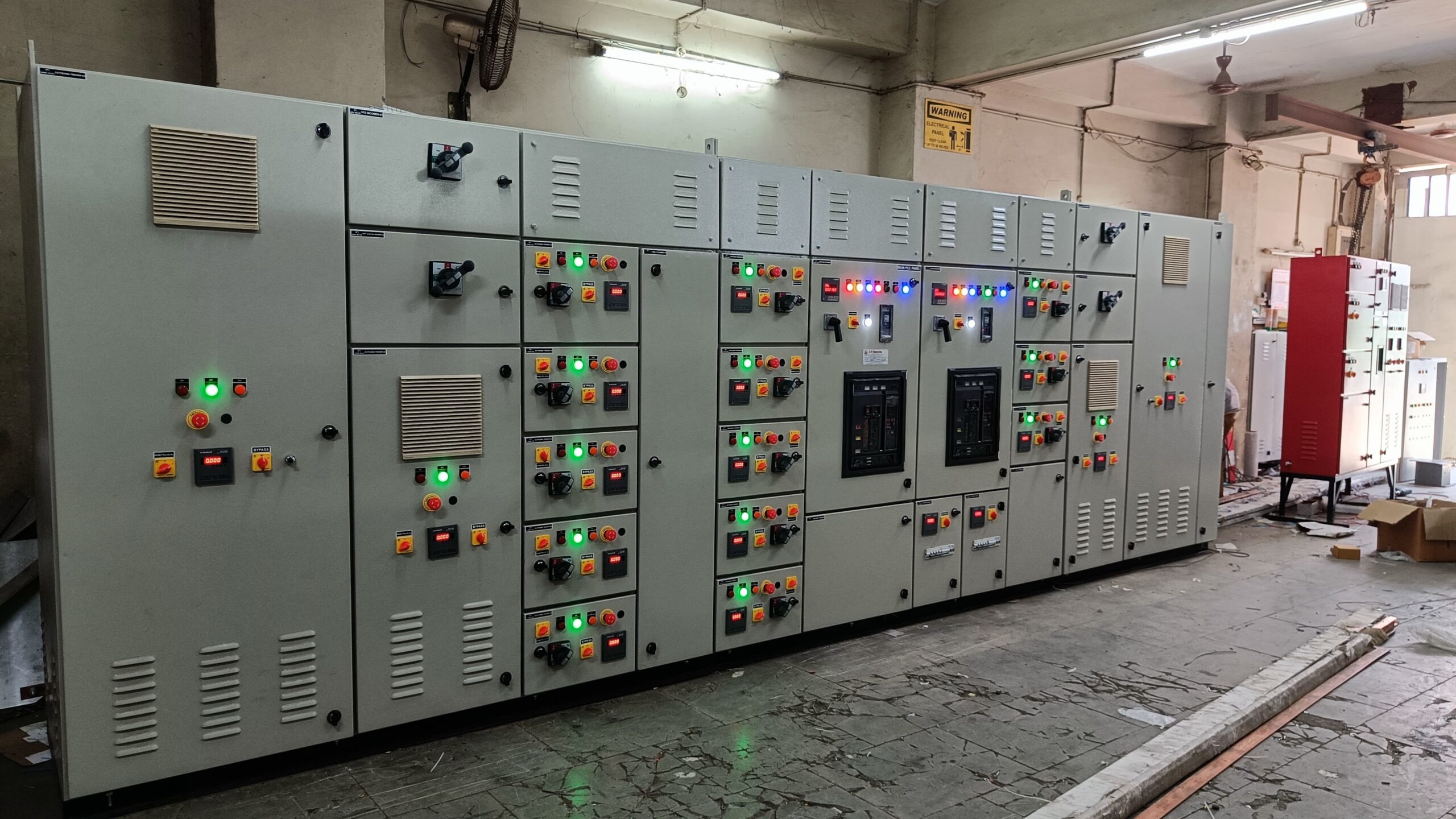
Pull up ten enclosure spec sheets from ten different suppliers and you’ll notice something odd. Every single one claims their material is “highly durable,” “corrosion-resistant,” and “built for Indian conditions.” None of them tell you how it actually fails, or when, or why the box next to it — made from something else — is still standing five years later while theirs isn’t.
That’s not an accident. A spec sheet exists to sell a product, not to explain its weaknesses. The comparison that actually matters — how mild steel, stainless steel, and SMC behave once they’re bolted to a pole in Konkan monsoon rain, or buried in Rajasthan dust, or sitting in a Bhilai steel plant’s sulphur-heavy air — almost never gets published, because no single manufacturer wants to admit where their own material loses.
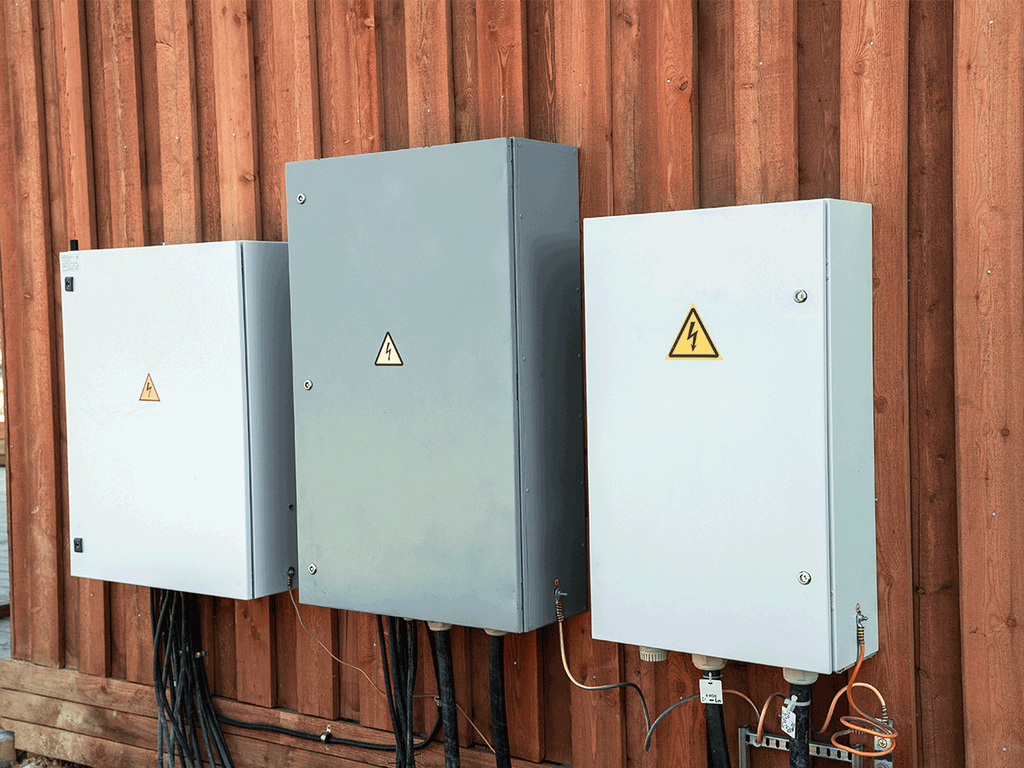
We make enclosures in all three at RMC — mild steel, stainless steel, and SMC/BMC composite — across our distribution boxes, meter boxes, and the Pulse Box™ line. Which means we don’t have a horse in this race the way a single-material manufacturer does. So here’s the comparison we’d want to read if we were the ones specifying equipment for the next ten years of a DISCOM contract.
Why Spec Sheets All Say the Same Thing
Every material has a genuine strength, and every marketing document leads with it. What none of them lead with is the specific way that same material breaks down once it’s exposed to a condition it wasn’t built for. That’s the part worth understanding before you sign a purchase order — not after the fifth monsoon.
The Three Materials, Head to Head
At a Glance
| Property | Painted Mild Steel | Stainless Steel (316) | SMC / FRP Composite |
|---|---|---|---|
| Upfront cost | Lowest | Highest | Moderate |
| Coastal / industrial (C4–C5) | Poor | Good | Excellent |
| Inland, dry performance | Good | Excellent (overkill) | Excellent |
| Conducts electricity | Yes | Yes | No |
| Needs protective coating | Yes | No | No |
| Structural strength | High | High | Moderate |
| Main failure mode | Coating breach → rust spread | Pitting / galvanic corrosion | UV ageing (long-term), impact limits |
Mild Steel: Cheap Until It Isn’t
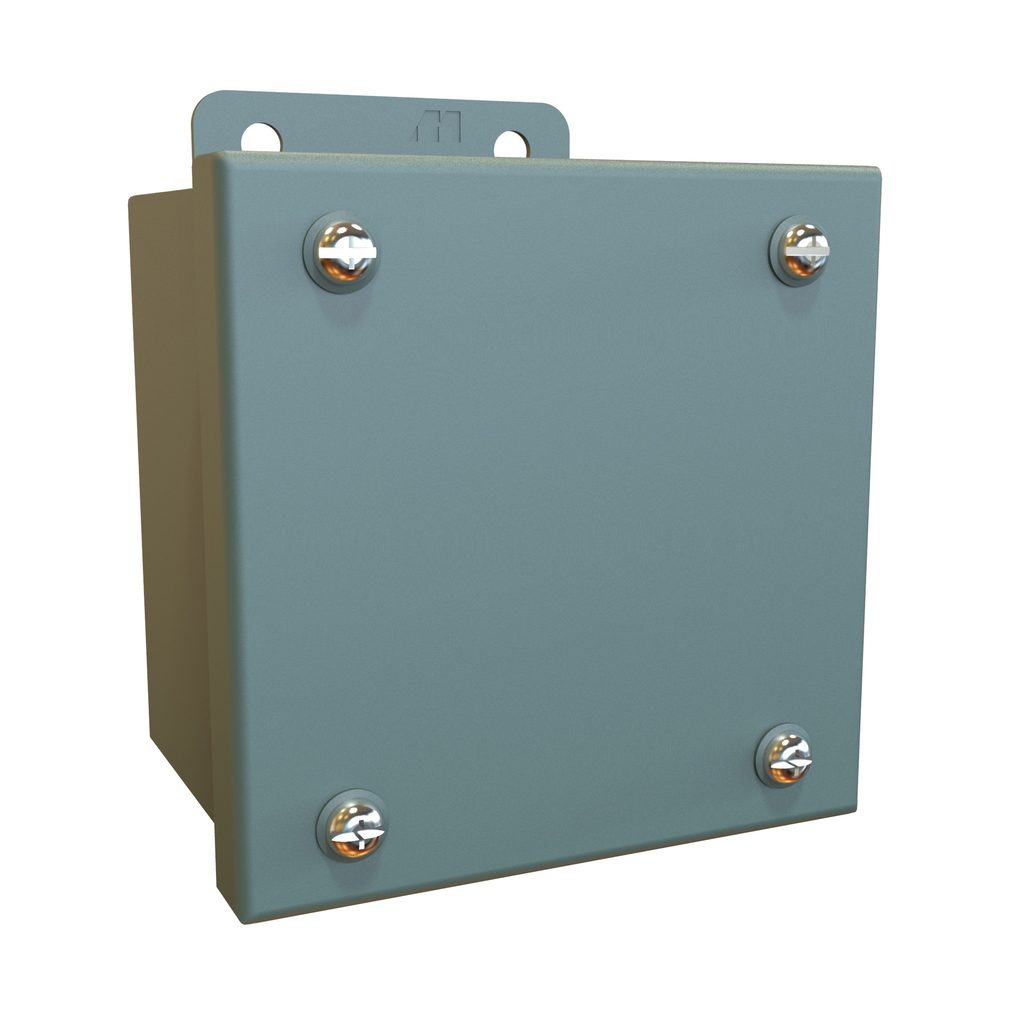
Painted or powder-coated mild steel is still the default choice across large parts of India’s LT network, and for good reason — it’s the lowest upfront cost, it’s structurally strong, and in a dry inland zone with no salt and no industrial fumes, it can genuinely last.
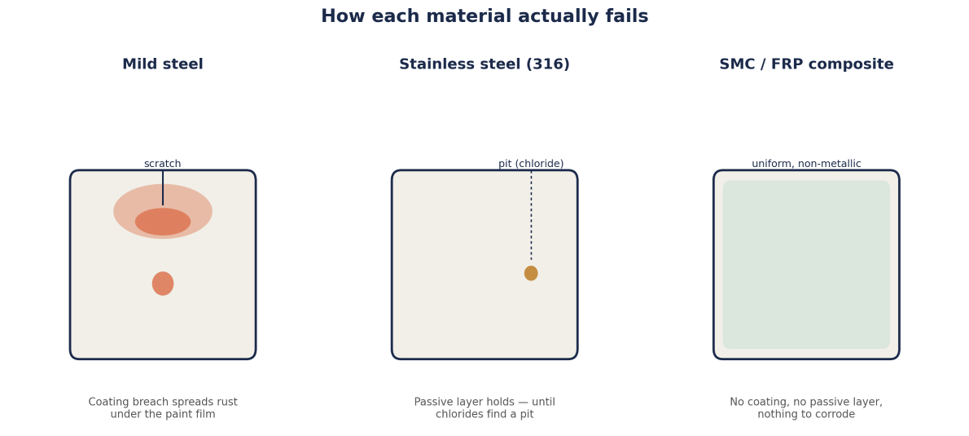
The problem is what happens the moment that condition isn’t met. Mild steel’s entire defense against corrosion is its coating. Once that coating is breached — a scratch during installation, a fastener point where two metals meet, a hinge opened and closed a few thousand times — bare steel is exposed, and bare steel in humid Indian air starts rusting within days, not years.
How it actually fails: The pattern is predictable. It starts small, at a scratch or a seam, and spreads outward under the paint film where you can’t see it — until the coating blisters and lifts. By the time it’s visible from outside, the metal underneath is often already thinned. In coastal or industrial corrosivity zones (ISO 12944-2 classification C4 and above), that timeline compresses from decades to single-digit years.
Stainless Steel: The Expensive Middle Ground
Stainless steel — specifically grade 316 for outdoor use — solves most of mild steel’s corrosion problem. It doesn’t need a coating to survive; the chromium in the alloy forms a passive oxide layer that regenerates itself when scratched. That’s a real structural advantage.
But “stainless” doesn’t mean “immune.” Two specific failure modes still apply:
| Failure Mode | What Happens | Where It’s Worst |
|---|---|---|
| Pitting corrosion | Chloride ions break down the passive layer at a single point and burrow inward, often invisibly, until a wall is perforated from the inside | High-chloride coastal environments |
| Galvanic corrosion | A stainless fastener paired with a mild steel or galvanized panel forms a small battery in the presence of moisture; the less noble metal corrodes preferentially | Anywhere dissimilar metals are mixed without isolation |
Stainless is also the most expensive of the three materials by a meaningful margin, which is why it tends to get specified for critical, high-value installations rather than blanket rollouts across thousands of distribution points.
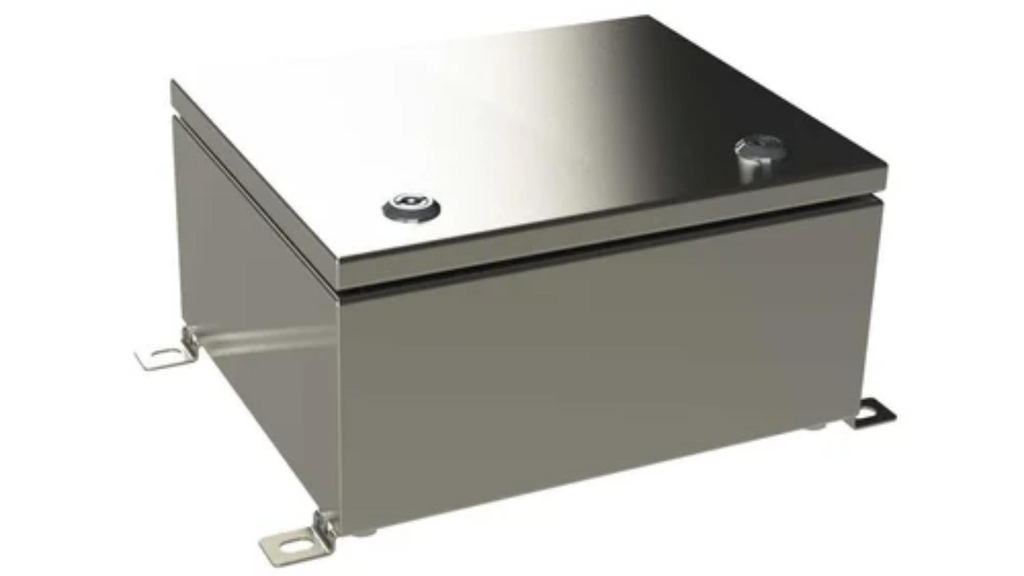
SMC: The Material With No Coating to Fail
Sheet Moulding Compound — SMC, the composite RMC uses across its FRP-based product lines — plays a different game entirely. It doesn’t corrode electrochemically, because it isn’t metal. There’s no coating to breach, no passive layer to pit, no galvanic couple to worry about. The failure mechanisms that define mild steel and stainless steel’s lifespan simply don’t apply to it.
That doesn’t make it failure-proof. Its real limits are UV degradation over very long exposure, and structural loading — it doesn’t match steel’s raw mechanical strength under heavy impact. That’s exactly why RMC’s Pulse Box™ pairs an SMC enclosure body with mild steel structural reinforcement rather than relying on either material alone: SMC handles the weather and eliminates touch-potential risk since it doesn’t conduct electricity, while steel carries the structural load. Each material does the job it’s actually good at.
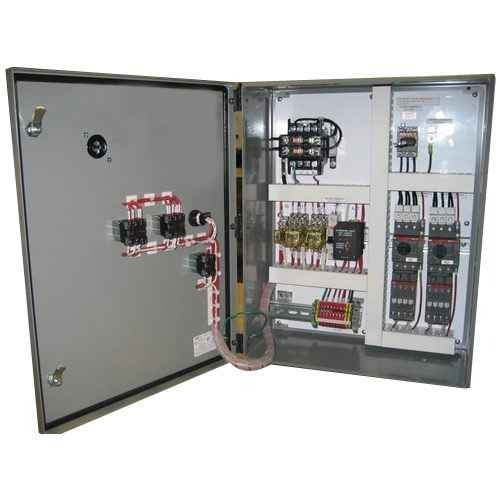
So Which One Actually Wins?
Here’s the honest answer, and it’s the one no single-material vendor will give you: it depends entirely on where the box is going.
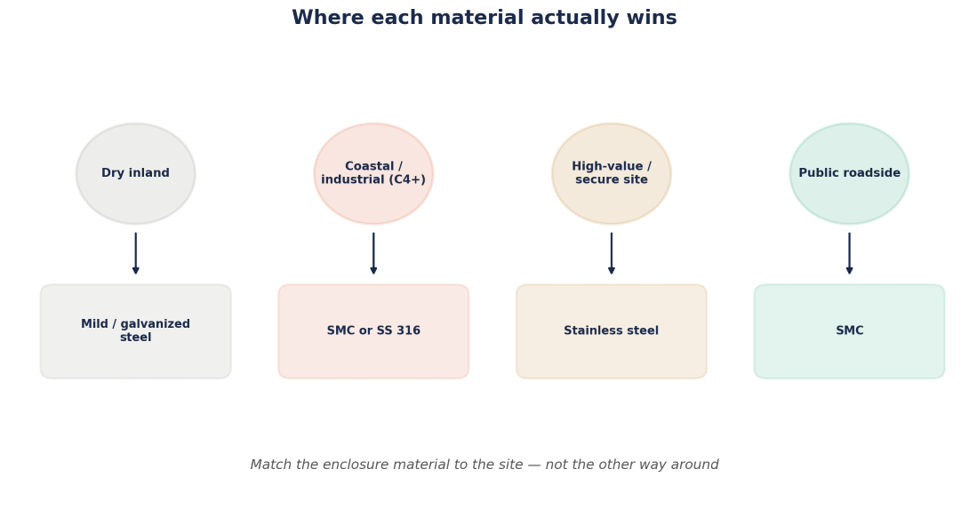
Match the Material to the Site
| Site Condition | Best-Fit Material | Why |
|---|---|---|
| Dry, inland, no industrial fumes | Powder-coated mild steel / galvanized steel | Genuinely cost-efficient — don’t overpay for resistance you don’t need |
| Coastal or heavy industrial (C4+) | SMC or SS316 | Mild steel’s economics collapse fastest here; higher upfront cost earns itself back in avoided replacement cycles |
| High-value, high-security installations | Stainless steel (matched fasteners) | Mechanical robustness and premium finish matter more than material cost |
| Public-facing roadside installations | SMC | Removes touch-potential risk mechanically, not just procedurally |
The mistake we see most often in the field isn’t choosing a “wrong” material in absolute terms. It’s choosing one material and specifying it everywhere, regardless of what the site actually demands — treating a corrosivity map like a formality instead of the single most important input into the decision.
The Real Test
There is no test nobody publishes. There’s just a decision most people skip: classify the site first, then choose the material that actually matches it. A manufacturer that makes all three materials has no reason to steer you toward one before you’ve answered that question — and that’s exactly the position RMC has built its product range around, from mild steel distribution boxes to SMC-bodied Pulse Box™ systems, based on thirty years of watching what actually survives in Indian field conditions, not what looks good on a coupon test in a lab.
The next time a spec sheet tells you a material is “built for Indian conditions,” ask which conditions. The answer usually isn’t on the page.
Frequently Asked Questions
Which material lasts longest for outdoor electrical enclosures in India?
It depends entirely on the site. In dry, inland areas with no salt or industrial fumes, powder-coated mild steel can last for decades. In coastal or heavy industrial zones (ISO 12944-2 category C4 and above), SMC or stainless steel 316 will consistently outlast mild steel by years, because they don’t rely on an intact coating to resist corrosion.
Is SMC actually better than metal, or just different?
Neither is universally “better.” SMC removes corrosion and touch-potential risk entirely because it isn’t metal, but it doesn’t match steel’s raw mechanical strength under heavy impact. That’s why RMC’s Pulse Box™ pairs an SMC body with mild steel reinforcement — each material does the job it’s actually suited for, rather than one material being asked to do everything.
Why does stainless steel still corrode if it’s called “stainless”?
Stainless steel resists corrosion through a passive chromium oxide layer that regenerates when scratched — but in high-chloride coastal air, that layer can break down at a single point, leading to pitting corrosion that burrows inward, often invisibly. It’s also vulnerable to galvanic corrosion if paired with a different metal (like a mild steel bolt) in the presence of moisture.
Is stainless steel worth the extra cost over mild steel?
For critical or high-value installations, usually yes — the mechanical robustness and corrosion resistance justify the premium. For large-scale rollouts across thousands of standard distribution points, the cost difference is harder to justify unless the site’s corrosivity genuinely demands it. This is a site-by-site decision, not a blanket one.
How do I know what corrosivity category my site falls under?
ISO 12944-2 grades atmospheres from C1 (heated indoor) up to C5-M (marine) and C5-I (industrial). As a working rule, sites within a few kilometres of the coast, or near cement, steel, fertiliser, or chemical plants, should be treated as C4 or above unless local testing says otherwise. Classifying every site against this scale before specifying materials is the single step most procurement teams skip.
Can I mix materials in the same enclosure, like a steel frame with an SMC body?
Yes — this is exactly the logic behind hybrid designs like RMC’s Pulse Box™. Combining materials only works when it’s planned at the design stage, not retrofitted later, since the two materials need to be engineered together to avoid issues like galvanic corrosion at their contact points.