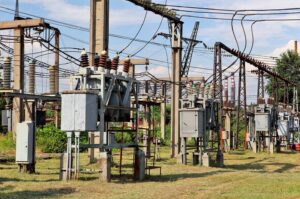
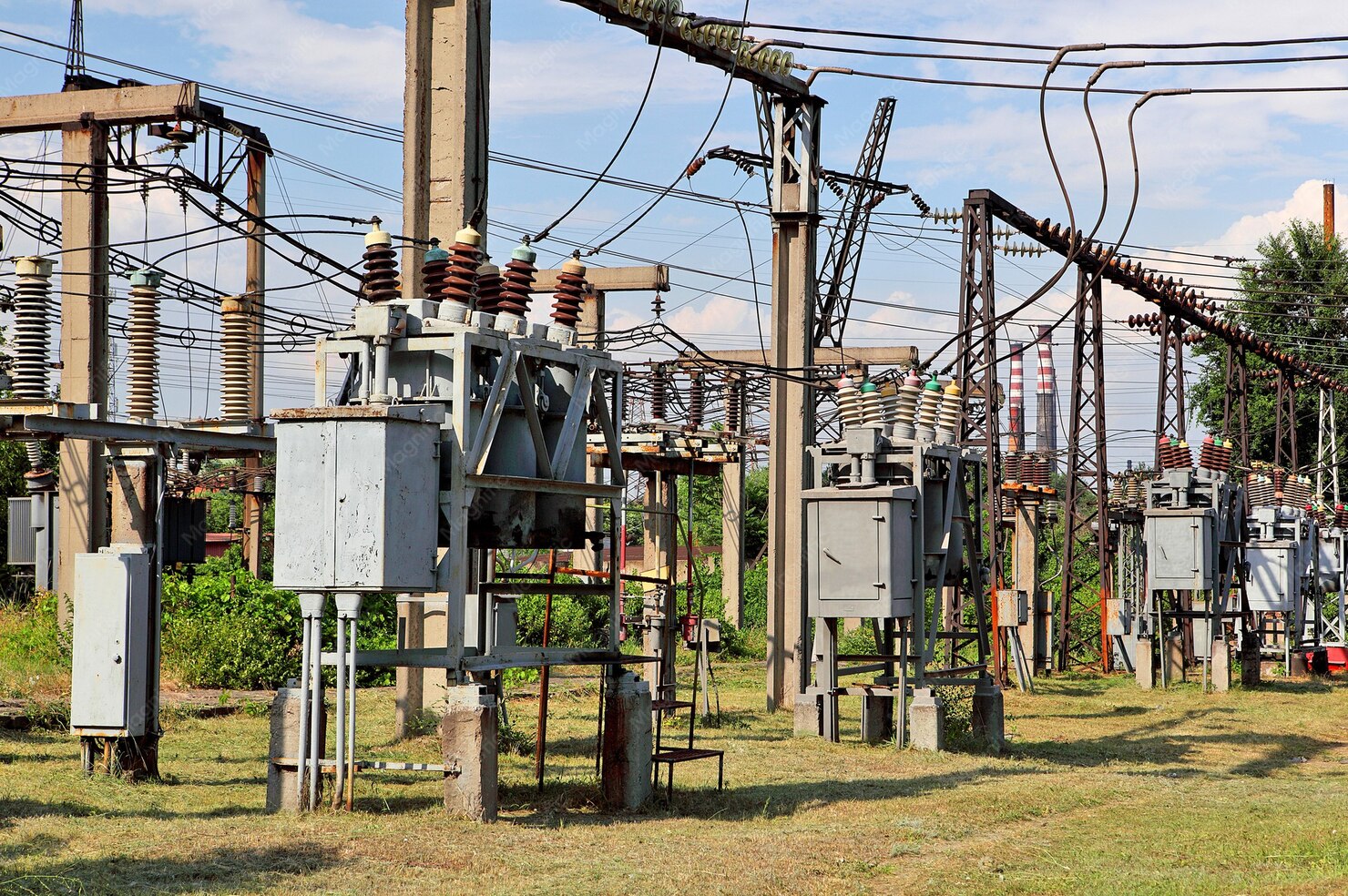
Open a ten-year-old feeder pillar on a coastal line and you already know what you will find. Green-white crust on the terminals. A door that no longer sits flush. Four fasteners so corroded they need a grinder, not a spanner.
The breaker was fine. The cable was fine. Water crept past a hardened gasket, sat on a busbar through one monsoon night, and the fault current finished the job.
That is not an electrical failure. That is an enclosure failure that was allowed to become one.
It matters far more now than it did ten years ago, because we have started putting electronics inside these boxes. A plain switch-fuse unit will shrug off a damp, hot enclosure for years. A smart meter will not. Nor will an RTU, a comms module or a monitoring card.
There is also a timing problem. Most of India’s LT distribution hardware went in between the 1970s and the 1990s, built to specifications borrowed from Europe. Those assets are wearing out right now — at the exact moment utilities are digitising their networks.
So the same purchase order often replaces the enclosure and adds intelligence. That is either a very expensive repeat of the original mistake, or the best chance anyone will get to fix it.
Why This Is a Safety Problem Before It Is a Maintenance Problem
India records more than 11,000 accidental electrocution deaths a year (NCRB, Accidental Deaths & Suicides in India). A share of these involve contact with low-tension distribution infrastructure.
A corroded metal enclosure sits directly in that risk path. Once the coating breaks and moisture starts tracking inside, two things happen together. Insulation resistance drops. And the enclosure body itself can go live during a fault.
Put that on a roadside in a residential colony and it stops being an asset management problem. It becomes a public safety one.
Which is why we start with the box, not the switchgear. Get the box wrong and everything inside it is already on a shortened clock.
What “Weatherproof” Actually Means in a Specification
“Weatherproof” turns up in almost every tender document. On its own it means nothing — it is an adjective, not a specification. Three standards do the actual work.
IP Rating (IS/IEC 60529)
| Rating | Solids | Water | Where it belongs |
| IP54 | Dust-protected | Splashing | Indoors or sheltered |
| IP55 | Dust-protected | Low-pressure jets | Marginal outdoors |
| IP65 | Dust-tight | Low-pressure jets | Dry inland zones |
| IP66 | Dust-tight | Powerful jets | Baseline for Indian outdoors |
| IP67 | Dust-tight | Temporary immersion | Flood-prone, low plinth |
For outdoor LT distribution here, treat IP66 as your floor. Not your ceiling.
Monsoon rain does not fall straight down. It comes in sideways, under pressure, straight at the door face. That is much closer to a jet test than a drip test.
The catch nobody mentions.
An IP66 certificate describes a brand-new enclosure. Sealed. On a test bench. With a fresh gasket. It tells you nothing about the same box after eight monsoons of UV and daily heat cycling.
Ingress protection is something you maintain, not something you buy once. It slips away three ways:
- The gasket takes a set — it moulds to the closed door and stops springing back
- UV and ozone attack the elastomer until it cracks
- Hinges and latches wear, so the gasket stops getting squeezed properly
This is the widest gap between what was specified and what is actually protecting your asset five years on. Worth asking suppliers about retained performance after ageing — not just the type-test certificate.
IK Rating (IS/IEC 62262)
Roadside kit gets hit. By vehicles, by cattle, by branches, and now and then by someone trying to break in. IK08 is a fair minimum where the public can reach it. IK10 for busy or unmanned sites. A cracked enclosure is an unsealed enclosure.
Corrosivity Category (ISO 12944-2)
Most Indian specifications skip this one. For coastal and industrial states it might be the most important of the three. ISO 12944-2 grades atmospheres from C1 (heated indoor) up through C5-M (marine) and C5-I (industrial), topping out at CX.
Plenty of India’s distribution network sits in C4 or C5 territory — the Konkan and Coromandel coasts, the Gulf of Khambhat industrial belt, the cement corridor through Rajasthan and Madhya Pradesh, and the steel belt across Jharkhand, Odisha and Chhattisgarh.
Send a C3 specification to a C5-M site and you have roughly halved the coating life before anyone has even unpacked the box.
The Four Stressors That Destroy Outdoor Enclosures
1. Monsoon Water Ingress
Most of our rain arrives in a four-month window, and intensity matters far more than the annual total. Take 2,000 mm spread evenly across a year — a gentle climate. Now squeeze the same 2,000 mm into roughly 100 days, with some days above 100 mm. A completely different problem.
Path 1 — Wind-driven rain
Monsoon rain hits the door face and the vertical seam head-on, under pressure. Gravity is no help here. The water is being pushed in, not falling past. This is why an IP65 box that copes fine in a dry district fails on an identical feeder design in Konkan.
Path 2 — Water wicking along cables
Water runs down the outside of a cable, reaches the gland, and follows the jacket straight inside. The gland is not faulty. It is sealing perfectly against the cable while the water travels on the cable.
Three controls stop it, and you need all three:
- Match the gland to the real cable OD. A cable sitting at the bottom of a gland’s clamping range is technically within spec and practically under-compressed. Measure the installed cable. Do not trust the catalogue figure.
- Drip loop every cable. Route the cable so it dips below the entry before rising into the gland. Water drops off the low point instead of reaching the seal.
- Bottom entry, always. Top entry puts the gland on the surface that collects standing water and catches direct rain. If top entry is unavoidable, a hood over it is mandatory.
Path 3 — Standing water at the base
Once water sits against the bottom of the box, the base seam is under constant pressure rather than occasional spray. IP66 is tested against jets, not submersion. Flood-prone sites need IP67 at the base and a raised plinth.
What happens once water gets in
Trapped moisture does not dry out and disappear. Overnight, warm humid air inside meets the cool underside of the roof, condenses, and drips onto terminals. Next afternoon it heats up, evaporates, and repeats. Across one monsoon that is 100-plus wet–dry cycles on live metalwork — and cycling is worse than sitting underwater, because each drying phase concentrates salts right at the metal surface.
The fix is not more sealing. It is drainage and controlled breathing: sloped roofs with drip edges, labyrinth channels at the base, and pressure-equalising breather-drains.
2. Coastal Salt Attack
Salt is hygroscopic. It pulls moisture out of humid air and keeps the surface wet well below saturation humidity. Which means your enclosure can be corroding actively on a bright, dry day with no rain at all.
- Pitting — localised penetration straight through the wall. The outside can look broadly fine while a pit is most of the way through.
- Crevice corrosion — in oxygen-starved gaps under gaskets, washers and fastener heads. It concentrates exactly at the sealing surface.
- Galvanic corrosion — a stainless fastener through a galvanised panel, with salt water bridging, is a working battery. The panel is the anode and it loses. One metallurgy throughout, or isolate deliberately with insulating washers.
Chloride levels drop off sharply inland. A site 500 m from the shore and one 5 km inland genuinely need different specifications.
3. Heat
Ambient is not the number that matters. What matters is the temperature inside the box: ambient, plus solar gain, plus whatever the equipment inside is dissipating. A dark metal enclosure in full sun commonly runs 20–30°C hotter inside than the air around it.
Busbars tolerate heat. Electronics do not. An aluminium electrolytic capacitor loses roughly half its service life for every 10°C above its rating. A part rated for ten years at 50°C, run instead at a steady 70°C, gets you about two and a half years.
That one relationship explains a lot of otherwise baffling field behaviour — smart meter and comms modules dying years early inside enclosures where the switchgear is still perfectly healthy. Two slower failures run alongside: solder joint fatigue from daily expansion and contraction, and memory instability that shows up as corrupted logs.
The moment you put intelligence inside an outdoor box, thermal design stops being optional. Your levers, cheapest first: light-coloured external surfaces, a low thermal conductivity material, a ventilated double-skin roof or sunshade, filtered or labyrinth ventilation sized against your IP requirement, and forced ventilation or thermostatic heating only where genuinely justified.
4. Industrial Air, Dust and Sand
- Cement belts — alkaline particulate that abrades coatings and traps moisture
- Steel and coke plants — sulphur dioxide, which becomes acidic condensate
- Paper mills — hydrogen sulphide, which attacks silver and copper contact surfaces
- Fertiliser plants — ammonia, brutal on copper and brass
- Chemical clusters — chlorides and other halide vapours
Then there is sand. Across Rajasthan, Gujarat and the arid Deccan it grinds coatings back to bare metal, blocks vents and leaves conductive deposits on insulation. Dust plus overnight dew creates a conductive film across insulation.
Metal, Composite, or Both?
We make enclosures in mild steel, stainless steel, SMC and BMC. So we have no reason to pretend one material wins everywhere. It does not.
| Property | Painted MS | Galvanised | SS 316 | SMC / FRP |
| Coastal (C5-M) | Poor | Moderate | Good | Excellent |
| Industrial (C5-I) | Poor | Moderate | Good | Excellent |
| Thermal conductivity | High | High | High | Low |
| Conducts electricity | Yes | Yes | Yes | No |
| Structural strength | High | High | High | Moderate |
| Capital cost | Lowest | Low | Highest | Moderate |
Inland, dry, no salt, no fumes? Powder-coated galvanised steel is a sensible, cost-efficient choice. C4 and above — coastal, industrial, or persistently humid — and an FRP electrical enclosure becomes the better answer. It removes the corrosion mechanism rather than slowing it, insulates thermally, and wipes out a whole category of touch-potential risk on a public-facing asset.
The Hybrid Answer
For LT distribution, the sharper question is not “metal or composite”. It is where each one belongs. That thinking is what produced Pulse Box™, our smart LT distribution system: a non-conductive SMC enclosure with mild steel reinforcement. SMC handles the weather and the shock-protection duty. The steel carries the structural load.
You cannot retrofit that. It is a decision taken at enclosure design stage — which is exactly why it belongs in your specification, not in your replacement budget.
Five Details That Decide Whether an Enclosure Survives
Material and IP rating get all the attention in tenders. These five decide the outcome.
- Gaskets — Name the elastomer, not just “gasket”. EPDM and silicone handle Indian UV and ozone far better than neoprene. Choose poured-in-place or moulded-in-place over a glued strip.
- Cable entry — More enclosures fail here than anywhere else. Bottom entry wherever possible. Certified glands matched to the actual cable OD. A drip loop on every cable. Blanking plugs at the same IP rating on every unused knockout.
- Drainage and breathing — Seal a box perfectly with no path for vapour and it will still condense inside. Pressure-equalising breather-drains solve this properly.
- Fasteners and hinges — One metallurgy throughout, or isolate dissimilar metals on purpose. A box that cannot be opened for maintenance has failed.
- Plinth height — Get the base above the local flood and standing-water level.
What Testing to Demand
Supplier claims are a starting point. Independent lab testing is the evidence. Whoever you are evaluating, ask for the same four things: which lab, which standard, which report number, what date.
A specification you cannot trace to a test report is a claim, not a specification.
Specification Checklist by Zone
| Zone | Corrosivity | IP | Material | Also specify |
| Coastal (<2 km) | C5-M | IP66 min | SMC/FRP or SS 316 | Non-metallic hardware, silicone/EPDM gasket, breather-drain |
| Heavy industrial | C5-I | IP66 | SMC/FRP | Chemical-resistant finish, filtered ventilation |
| High-rainfall inland | C3–C4 | IP66 | SMC/FRP or coated GI | Sloped roof, drip edge, bottom entry only |
| Flood-prone | Varies | IP67 at base | SMC/FRP | Raised plinth, sealed bottom entry |
| Arid / dusty | C2–C3 | IP66 | Coated GI or SMC | Sunshade, abrasion-resistant finish, filtered vents |
| Urban roadside | C3–C4 | IP66 | SMC/FRP | IK10, non-conductive body, tamper-resistant locking |
What It Really Costs to Get This Wrong
A properly specified weatherproof enclosure costs more up front. That is simply true. The argument is total cost of ownership, and four things get left out of most capital comparisons:
- Replacements you avoid — Replace at year eight instead of year twenty-two and you have bought two extra replacement cycles.
- Outages — An enclosure failure on a feeder is an unplanned outage, with SAIDI and SAIFI consequences.
- Everything inside it — The box protects assets worth many times its own value.
- Safety — A corroded metal box with failing insulation on a public footpath is a touch-potential risk.
Frequently Asked Questions
IP66 is the practical minimum for outdoor distribution equipment in most Indian conditions, because monsoon rain arrives wind-driven and under pressure rather than vertically. Go to IP67 for flood-prone sites.
In coastal and industrial areas, yes. SMC does not corrode electrochemically, does not conduct electricity, and has far lower thermal conductivity than steel. Inland, in dry conditions, coated galvanised steel remains a reasonable and cheaper option. Many LT applications suit a hybrid approach
Usually one of four things: gaskets degrading under UV and heat cycling, water tracking in along cable glands, chloride-driven pitting and crevice corrosion, or heat killing the electronics inside.
Airborne chloride falls off sharply as you move inland, but confirm it site by site. As a working rule, treat anything within a few kilometres of the coast as C5-M unless local data tells you otherwise.
No. Sealing harder can actually trap more moisture inside. Condensation is managed through pressure-equalising breather-drains, thermal design and drainage paths.
At minimum: an IP type-test certificate to IS/IEC 60529, an IK rating to IS/IEC 62262, and salt-spray performance to ISO 9227 matched to your site’s corrosivity category. For LT distribution boxes, add short-circuit withstand and temperature-rise testing from a recognised lab. Ask for report numbers and dates, not summary claims.
If you manage outdoor assets across more than one climate zone, do this one thing before your next procurement cycle. Classify every site by ISO 12944 corrosivity category, then specify against that classification instead of issuing one national standard specification everywhere.
Almost every premature failure we see traces back to a coastal or industrial site being handed an inland specification.